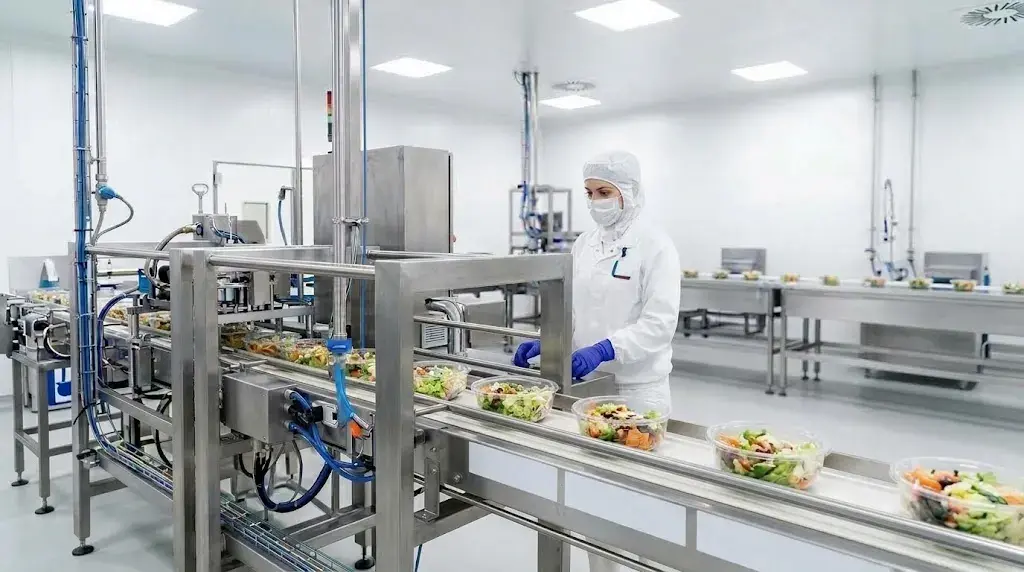
A single food safety training session at the start is not enough when new employees are joining the production floor every week. employees remember hygiene rules better when the explanation is clear, tailored to their language and repeated regularly. A short, visual instruction on their mobile phones, complete with a knowledge check, makes this achievable, without your team leaders having to start from scratch every time.
What should a food safety training course in the workplace achieve?
Ultimately, food safety is all about what happens on the production floor. No matter how well the HACCP plan is set out on paper, a product is only safe if every member of staff in the production area actually follows the rules.
Think of the hairnet that covers the ears, jewellery left in the locker, washing hands after every break and wearing the correct clothing in the production area. On-the-job training is therefore not about theory. It’s about what someone does between the changing room and the production line.
The difference lies in the format. A signed instruction form shows that someone has heard or read the rules. A knowledge test shows whether they actually understand them.

Why hygiene rules slip when staff turnover is high
With a permanent team, you explain the hygiene rules properly once and repeat them from time to time. With a lot of agency staff, it works differently. New staff members start at various times throughout the month, sometimes right in the middle of peak season.
The instruction is then often given by whoever is on duty that day. One team leader walks staff through the hygiene procedure step by step. Another simply says: ‘Wash your hands and put on a hairnet.’ As a result, two staff members start the same week with a different understanding of the basics.
Then there’s the language barrier. An employee with limited understanding of Dutch might nod along during the explanation. But perhaps they’re missing the very reason why the production line must be completely cleaned when switching between allergens. It’s rare for them to ask for clarification on their first day at work.
Why a one-off hygiene training session isn’t enough
In many food businesses, managers attend an HACCP course and new staff receive hygiene training when they start. This provides a good foundation. But what someone learns on day one isn’t always remembered after a few weeks.
Small deviations then creep in. A watch that’s left on after all. A glove that isn’t changed after touching a dirty surface. An apron that’s taken into the canteen. It is precisely these small things that an auditor spots on the production floor.
Repetition is therefore just as important as the initial explanation. However, you can’t have a team leader start from scratch every month for every member of staff.
Demonstrate the hygiene rules in the employee’s own language
Hygiene rules are easier to remember when you show someone what they need to do. An employee walking through the hygieneport in 3D can see the order in which they should put on their clothing, wash their hands and enter the production area. It’s as if they’re already right in the middle of it, even before they set foot on the floor.
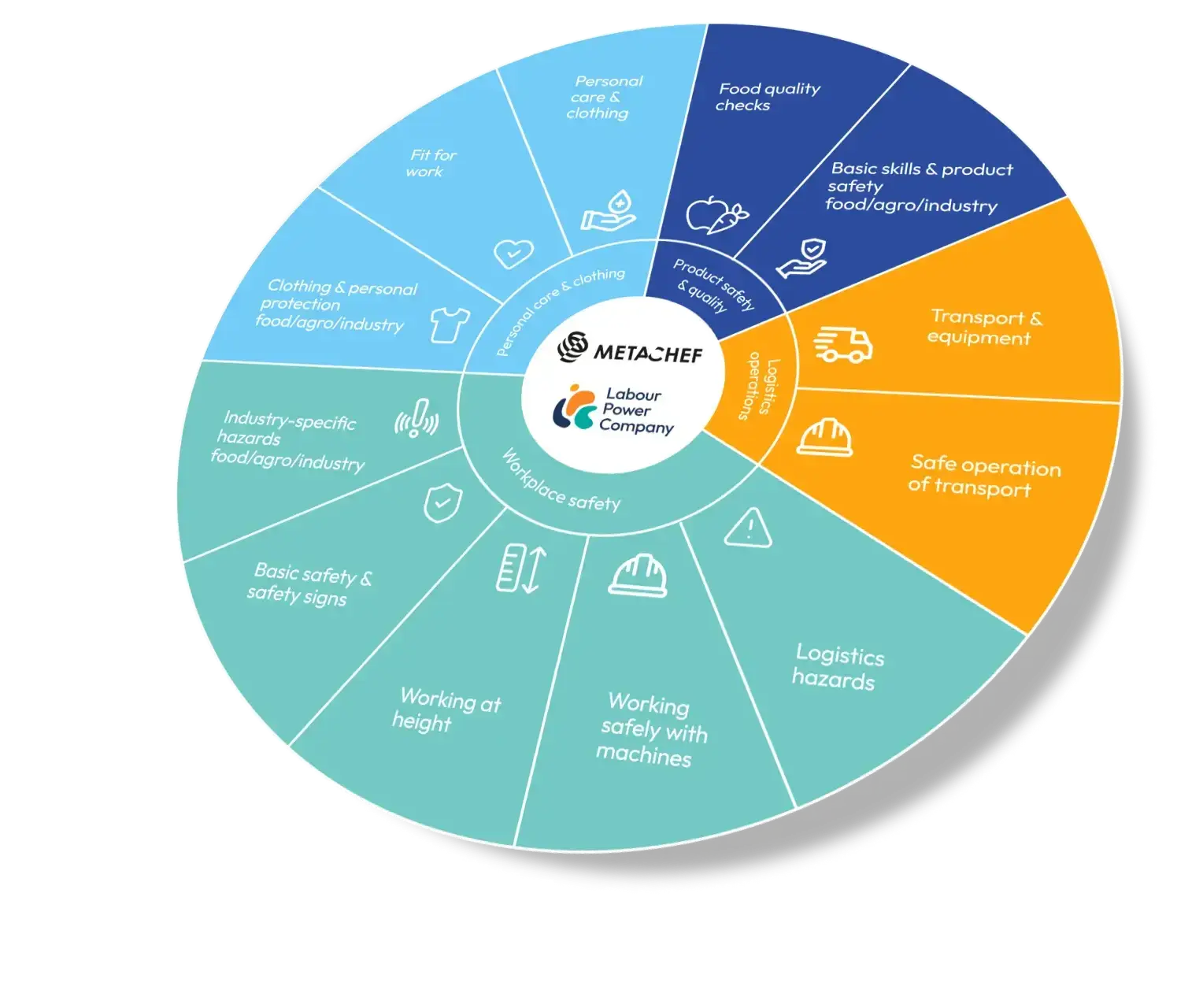
That is the basis of the 3D training courses on hygiene and product safety in the Skillcircle: short training modules for flex and permanent employees, developed by MetaChef. They cover topics including hygiene, workwear, personal protection and allergens.
Employees complete the training independently on their own mobile phones and tap on a section to see how it’s done. The training modules are multilingual, featuring animations rather than long texts. This also helps employees who find reading more difficult.
Food safety e-learning that you can repeat and provide evidence of
You can run a training course on your mobile as often as necessary: following a non-conformity, at the start of a peak season or in the run-up to an audit. This ensures the information is refreshed, without a team leader having to call everyone together again.
For each employee, you can see which training courses have been completed, how much time was spent on them, and what score they achieved in the knowledge test. You can export this overview as a CSV or PDF file. During an HACCP or BRCGS audit, you can then show not only signed forms but also what employees have actually learnt.
It is also important to note that the Skillcircle is not a certification scheme. MetaChef does not issue official certificates, and a Skillcircle training course does not replace a certified HACCP or hygiene course. If a role requires a statutory or industry-specific certificate, the relevant training course will still be necessary. The training course teaches and assesses knowledge, but does not provide a certificate.
How to keep food safety rules alive in your workplace
With Skillcircle, food safety isn’t just a one-off training course you tick off a list, but something that’s revisited regularly. New employees start on the same base, and you can keep track of what they’ve understood.
Seeing is understanding.
Do you want to integrate hygiene rules into the rest of the onboarding process? Then read about how to onboard new staff when new people are joining the production line every month, or how to deliver safety instructions that stick with employees who speak other languages. Or find out how 3D training works on the shop floor.