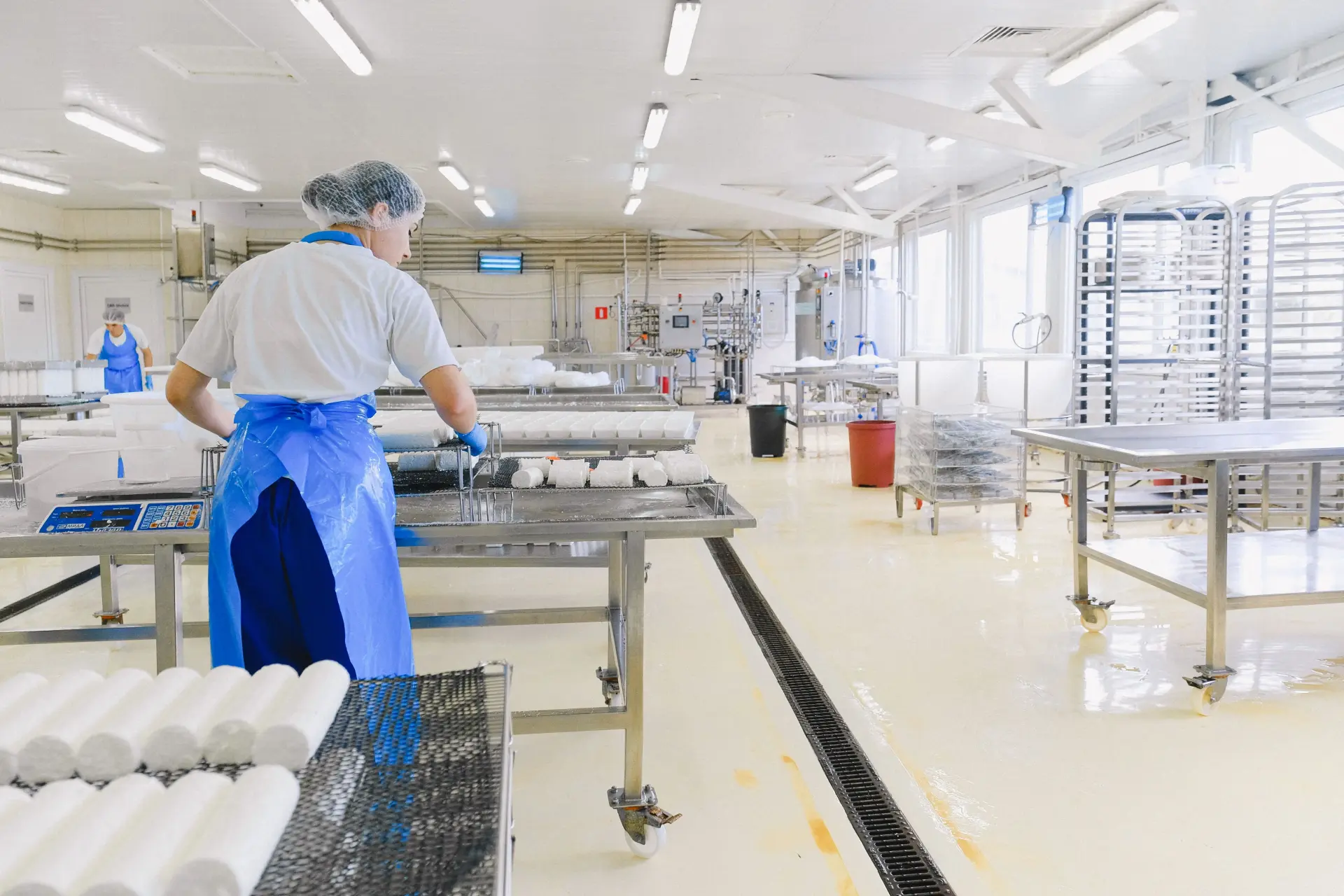
New employee onboarding without starting from scratch every time
New temporary workers on the production line every month? Then the onboarding process starts all over again each time, and that costs your team leaders an unnecessary amount of time.
The challenge begins the moment a new employee steps onto the production floor. A team leader has to free up time, an experienced colleague has to provide instruction, and someone has to check that the basic instructions have been properly understood. All while production simply carries on.
With high staff turnover, that process repeats itself every month. What's more, the explanation can differ from one team leader or colleague to the next. What one employee learns on day one is therefore not necessarily exactly the same as what the next employee hears.
Good onboarding of new employees therefore requires more than just a good onboarding programme. It also requires a way of working that is scalable.
Why onboarding on the production floor is difficult to scale
New employees learn a great deal on the production floor. They need to know not only what their task is, but also how to carry it out safely and according to the correct working method.
Think of an employee standing at a production line for the first time. Where do you start? Which parts of the line are important? How do you perform a task? And what do you do if you can no longer remember something exactly?
New employees often receive that initial instruction from a team leader or experienced colleague. They know the process and can show new employees how it works.
That has an advantage: the employee receives instruction that ties in directly with day-to-day practice. At the same time, it takes time every single time. And not every colleague explains a task in exactly the same way.
That makes it difficult to give every new employee the same foundation. The instruction depends on who happens to have time to train someone in, while new employees actually need to be able to work independently and according to the correct working method as quickly as possible.
Don't let onboarding become a repeat exercise for the team leader
You don't have to explain everything from scratch to every new employee. Some of the basic information can be made available in a way that employees can use independently.
That's where the Skillcircle comes in:
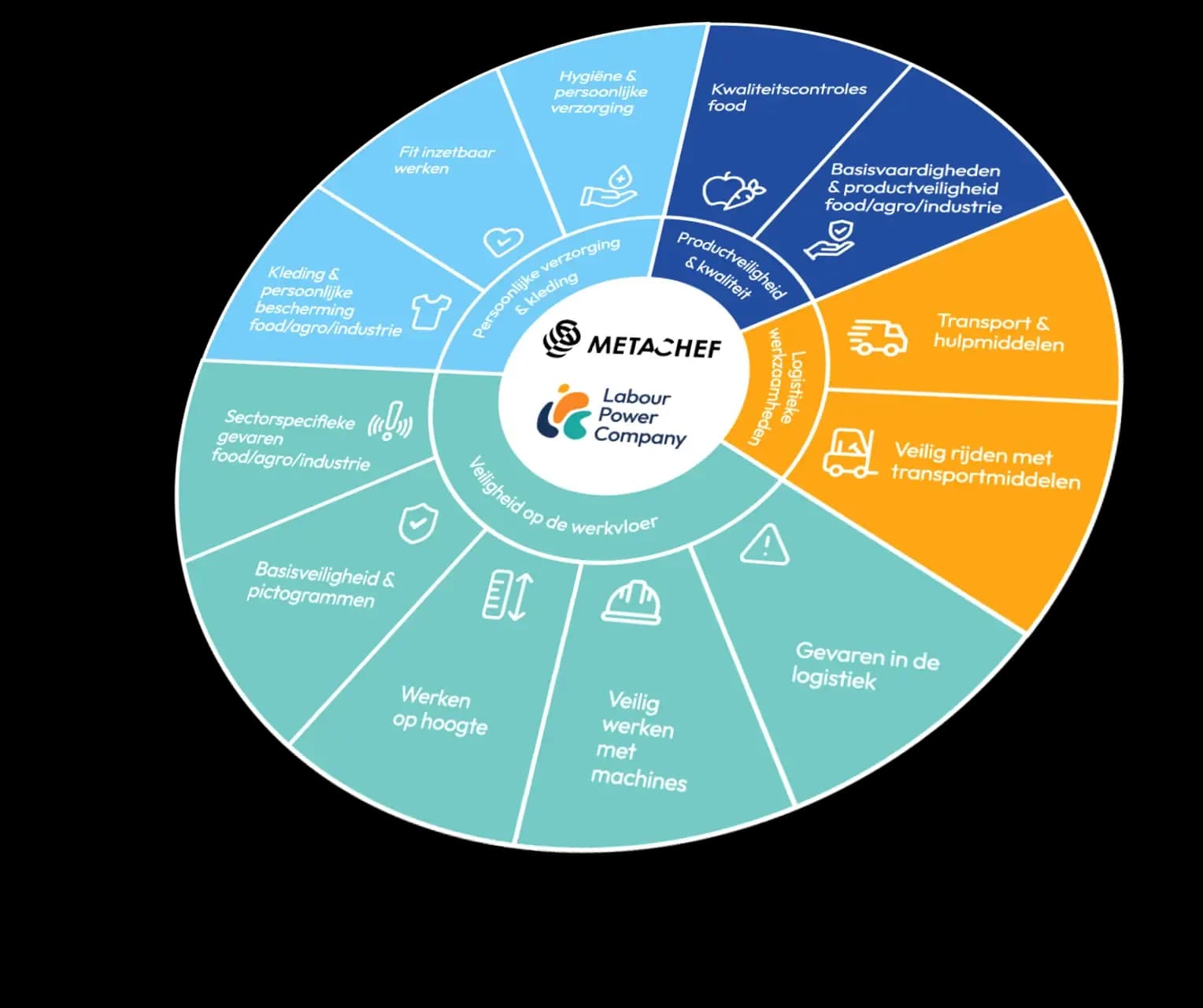
The Skillcircle consists of short 3D training courses that help temporary and permanent employees carry out practical tasks on the production floor quickly, safely and independently, and develop themselves further. The 3D training courses were developed by MetaChef together with Labour Power Company (LPC).
The principle is simple: seeing is understanding.
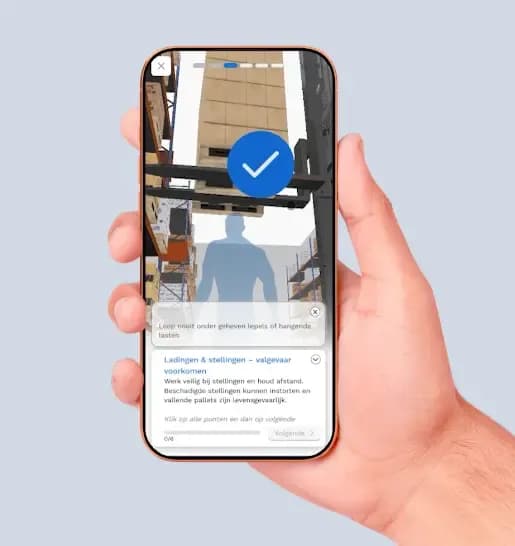
Instead of merely telling employees how something should be done, it shows them what a work situation, machine, or task looks like. The employee is not literally standing next to a team leader, but is presented with the working environment via their smartphone.
This means an employee can watch the training again at any time, whenever needed.
From explanation to visual
For someone who is new to a production line, a verbal explanation can contain a lot of information at once. A team leader can describe which steps to follow, but the employee then has to translate that explanation into what is in front of them. With 3D training, you can make that step smaller.
An employee sees the working environment and gains insight into the task that goes with it. Through the Skillcircle, the employee learns all about personal hygiene, product safety, quality, logistics tasks, and safety on the production floor. As a result, the instruction ties in directly with the practice the employee is being trained for.
That is particularly relevant when employees speak different languages. The Skillcircle was developed precisely for situations in which language variation plays a role. All training courses are available in multiple languages.
Moreover, the instruction remains available after someone has been trained in for the first time. If an employee later has doubts about a task, the information can be viewed again, simply from their own smartphone.
What does this mean for your onboarding?
Good onboarding of new employees does not have to mean that a team leader explains every step in person.
The basics of a process can be provided in advance in a consistent way. This gives the employee an initial picture of the work, while the team leader can focus on the guidance that can only take place on the shop floor.
This also changes the role of the team leader. Instead of repeating the same basic information time and again, there is more room to observe the employee at work and answer questions.
Personal guidance does not disappear. Rather, you deploy it at the moment when it adds the most value.
One consistent way of training people in, even when your team keeps changing
With high staff turnover, it is important that new employees are not entirely dependent on whoever happens to be on shift at the time.
One team leader may explain a particular task differently from another. An experienced employee might explain at length why a particular step is important, while another colleague mainly describes what needs to be done.
By capturing the basic instruction in short 3D training courses, you create a consistent foundation for the induction process. This helps make knowledge accessible to new employees, even when the composition of a team changes regularly.
For HR, this means an onboarding process that is less dependent on individual colleagues. For the team leader, it means less repetition. And for the new employee, it means a way to view information in the moment and consult it again later.
New employee onboarding that ties in with the production floor
The Skillcircle was developed for the food, agri and industrial sectors. These are precisely the environments where new temporary workers need to find their feet quickly on the shop floor and where employees from different backgrounds work together.
The aim is not to replace human guidance. The aim is to make the basics of the induction process available in a smarter way.
This turns the onboarding of new employees into a process that does not have to start from scratch every time. Every employee receives the same basic instruction, while the team leader has more time left for guidance on the production floor.
Seeing is understanding.
Would you like to get new employees up to speed faster and in a consistent way? Read more about the Skillcircle.