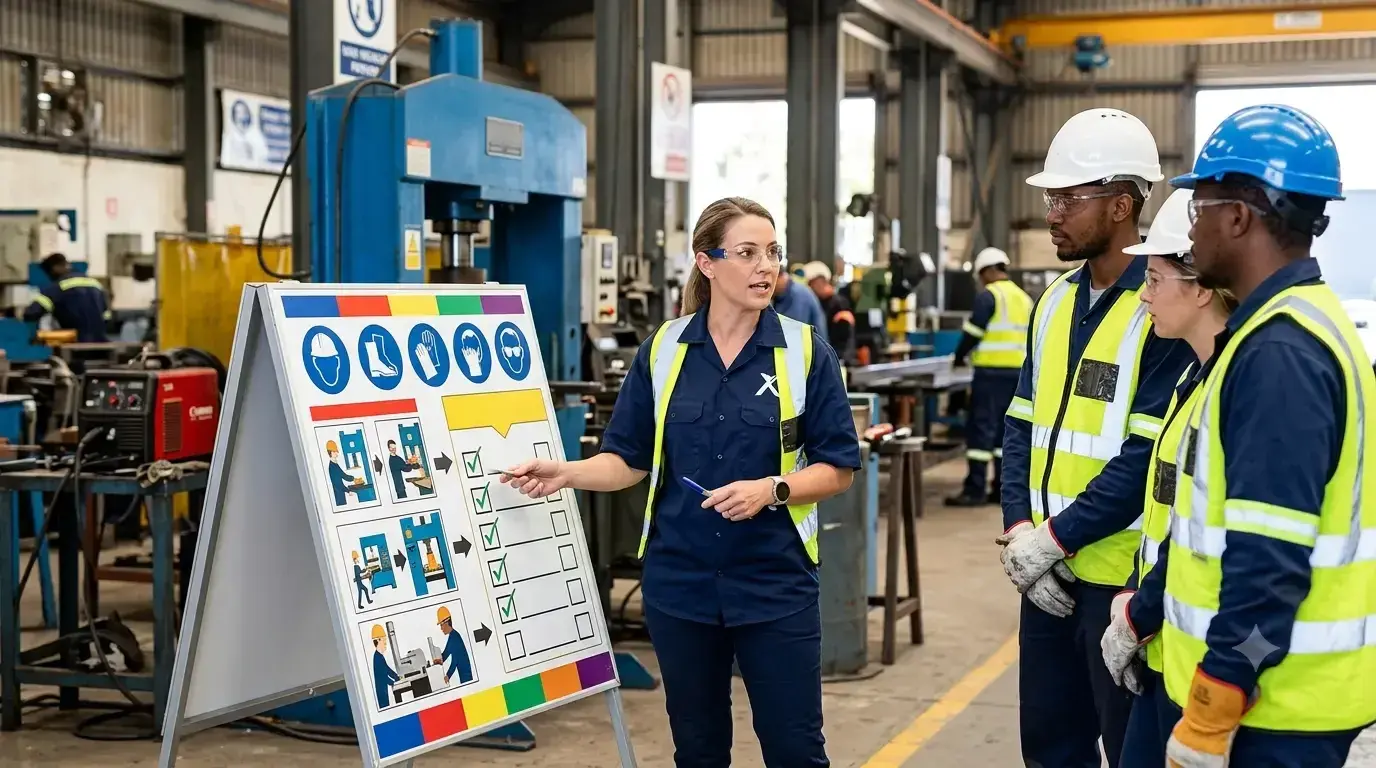
A safety instruction only truly works when an employee understands what to do and why. That becomes harder when employees speak different languages or find it difficult to read Dutch. Reading out the instructions and collecting a signature shows that the explanation was given, but not whether it was understood.
An effective safety instruction therefore combines clear visuals, a language the employee understands and a short check on understanding.
What should a safety instruction make clear?
A safety instruction explains which risks exist on the work floor and how an employee deals with them safely.
Think of the walking routes on a production floor where forklift trucks operate, using the right cut-resistant glove, or what an employee should do when a machine jams.
For a prevention officer, it is not just about giving the briefing. You also want to be able to check whether employees understand and apply the most important safety rules.
That becomes harder when not everyone speaks the same language.
Why does a safety instruction not always land?
Things move quickly on the work floor. A team leader explains the safety rules, the employee nods and the instruction form is signed. Then everyone gets to work.
But a nod does not automatically mean the explanation has been understood.
A verbal explanation contains a lot of information at once. If an employee has a limited understanding of Dutch, part of the explanation can get lost. And people do not always ask questions. A new employee is unlikely to admit that they have not understood an instruction.
An English translation does not always solve the problem either. For a Polish, Romanian or Spanish employee, English may just as well be a second language. And when someone struggles to read, a translated text is still of limited help.
That is why translating the text alone is not enough. The way you deliver the briefing plays an important role too.
A safety instruction for employees: the same foundation for everyone
With high staff turnover, a safety instruction has to be given again and again. Every new employee needs the same foundation, while production carries on as normal.
On top of that, the explanation can vary between team leaders or experienced colleagues. One person explains at length why a safety rule matters, while another mainly tells people what to do.
That makes it difficult to deliver the instruction the same way every time.
A fixed, visual instruction can help. The basic information is set in advance and is the same for every employee.
Make the safety instruction visual and multilingual
A safety instruction becomes easier to understand when you show what someone needs to do.
An animation can show where a hazardous zone is located, for example. An image can make clear which protective equipment is required. You can then offer the explanation in the employee's own language.
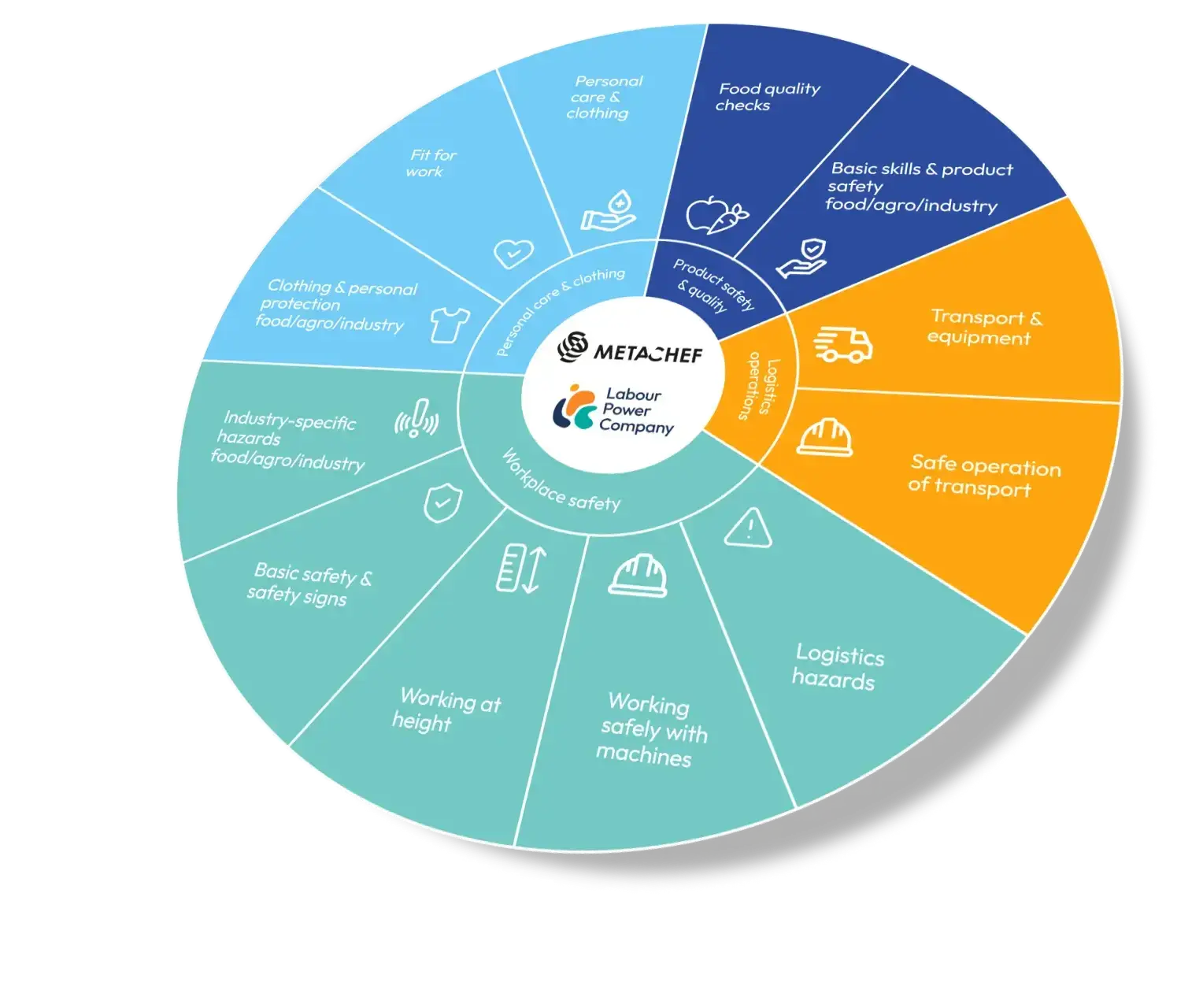
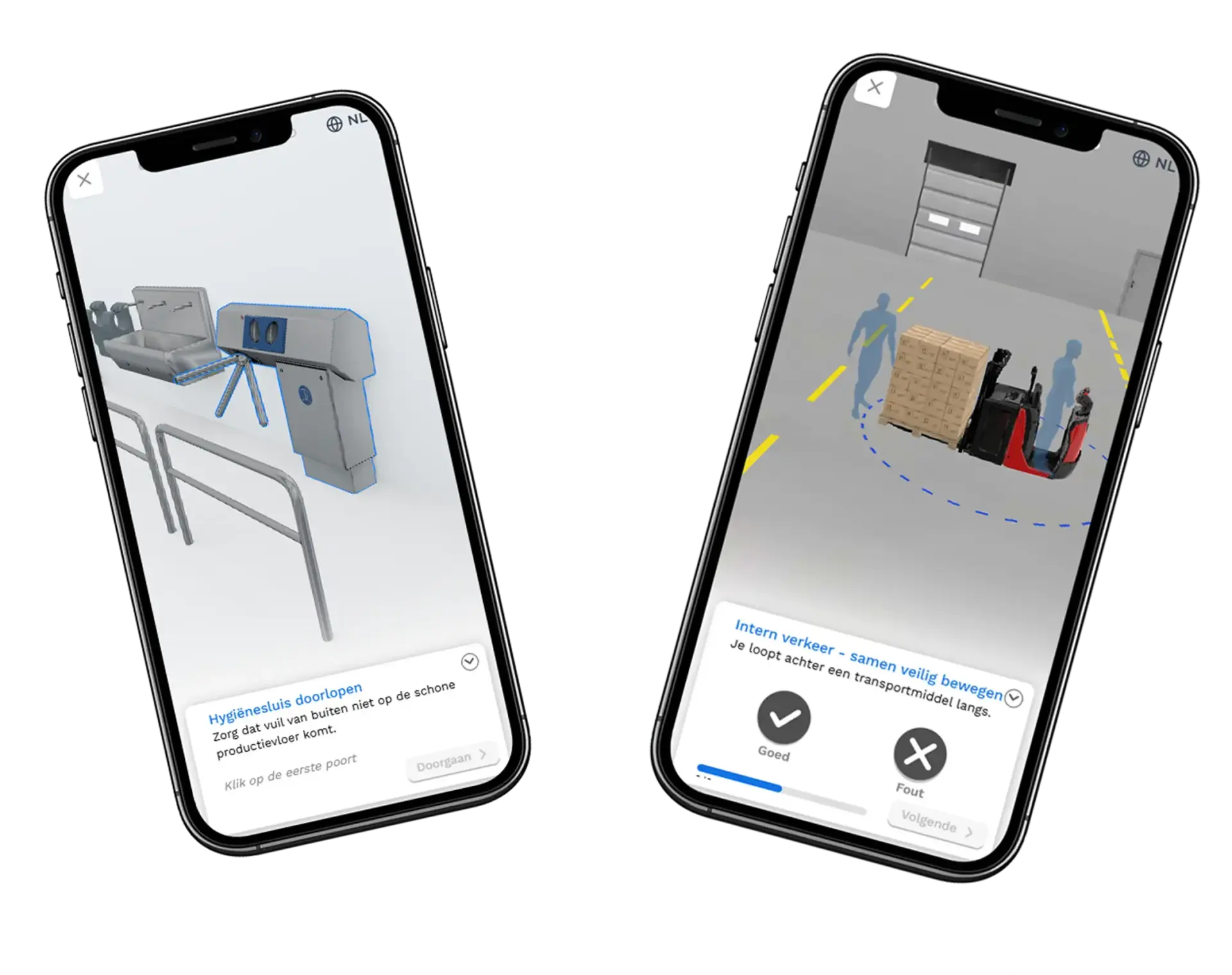
That is also the principle behind the Skillcircle: short 3D training modules that flexible and permanent employees can work through independently as practical instructions. The employee views the working environment in 3D and is shown visually which actions and safety rules matter. The training can also be offered in several languages.
This way, every employee receives the same basic briefing, regardless of who is on the work floor that day.
Check that the safety instruction has been understood
Watching an instruction is not yet proof that someone understands the content.
So finish with a short knowledge check. Ask questions about the most important safety rules, for example, or have the employee indicate what they should do in a given situation.
That way you check not only whether the employee has completed the training, but also whether the key information has been understood.
Within the Skillcircle, training and results can be tracked per employee. It is visible which training someone has completed and how they performed on the knowledge check. This data can be exported as CSV or PDF.
That gives a much clearer overview of the briefings completed than a stack of signed forms.
Practice on the floor still matters
A multilingual safety instruction in 3D does not replace guidance on the work floor.
An employee ultimately has to be able to act in the real working environment. At a machine, for example, a team leader still needs to demonstrate how an action is carried out and check that the employee can perform it safely.
The digital instruction mainly ensures that the basics are clear in advance. That means the time on the work floor can be used for practising, answering questions and correcting.
A 3D training module does not replace mandatory certification either. Where a legal or industry certificate is required for a particular task or machine, the designated course or certification remains necessary.
Deliver the safety instruction with the MetaChef Skillcircle
This turns a safety instruction into more than a form that gets signed. The employee receives a clear explanation, in a format and language that suit the work floor. At the same time, as a prevention officer you keep a better overview of what employees have completed and understood.
Seeing is understanding.
Would you like to know how to combine safety briefings with a broader onboarding process? Read how to onboard new employees when new people regularly join the line, or discover what training with 3D means for the work floor.