Safe driving with transport equipment training
A trailer pulling away while the forklift is still inside, a mast hitting a sprinkler: on a forklift, one moment of haste has serious consequences. Yet instruction often consists of a certificate from years ago. Dutch health and safety law requires more: drivers must receive demonstrable instruction. For employers, that means two things: drivers who drive safely, even under time pressure, and proof that the instruction was provided.
Skillcircle's Safe driving with transport equipment training delivers both. Drivers practise in 3D what you never want to experience for real, such as a moving trailer. You can see who completed the training. Use the module on its own or as part of the complete onboarding and safety training in 3D.
Rules for safe driving with transport equipment
Not a theory book, but the safety rules for the four situations where things go wrong, shown step by step:
Driving behaviour with a forklift
Check that the pallet is stable, fasten your seat belt and safety bar, and drive with the mast lowered, the forks about 3 centimetres above the floor and in reverse when carrying a load. Stopping? Apply the brake fully and only get off once the forklift has stopped, using the handle and step, never jumping.
Recognising dangerous situations
Transport equipment is for the driver only: nobody stands on the forks or rides along. After a collision, stop immediately, switch off, check the racking and report it; change and charge batteries according to the instructions, only at a fixed power point.
Safely loading and unloading trailers
Only drive into a trailer once it is properly docked and the light is green or wheel chocks are in place, and don't let anyone rush you when in doubt. Feel the trailer move? Stop immediately and stay seated in the forklift so you don't get trapped.
Be aware of environmental factors
Drive slowly over wet floors without unnecessary steering and report them immediately, and always drive with the mast fully lowered so you don't hit low passages or sprinklers. Pedestrians always have right of way: sound your horn at blind spots without a blue spot.
After completing the module, every employee will be able to use transport equipment safely in any situation. The training concludes with a knowledge test. Don’t follow the rules for your boss’s sake, but for your own: that’s the message that sticks.
Demonstrable for every inspection and audit
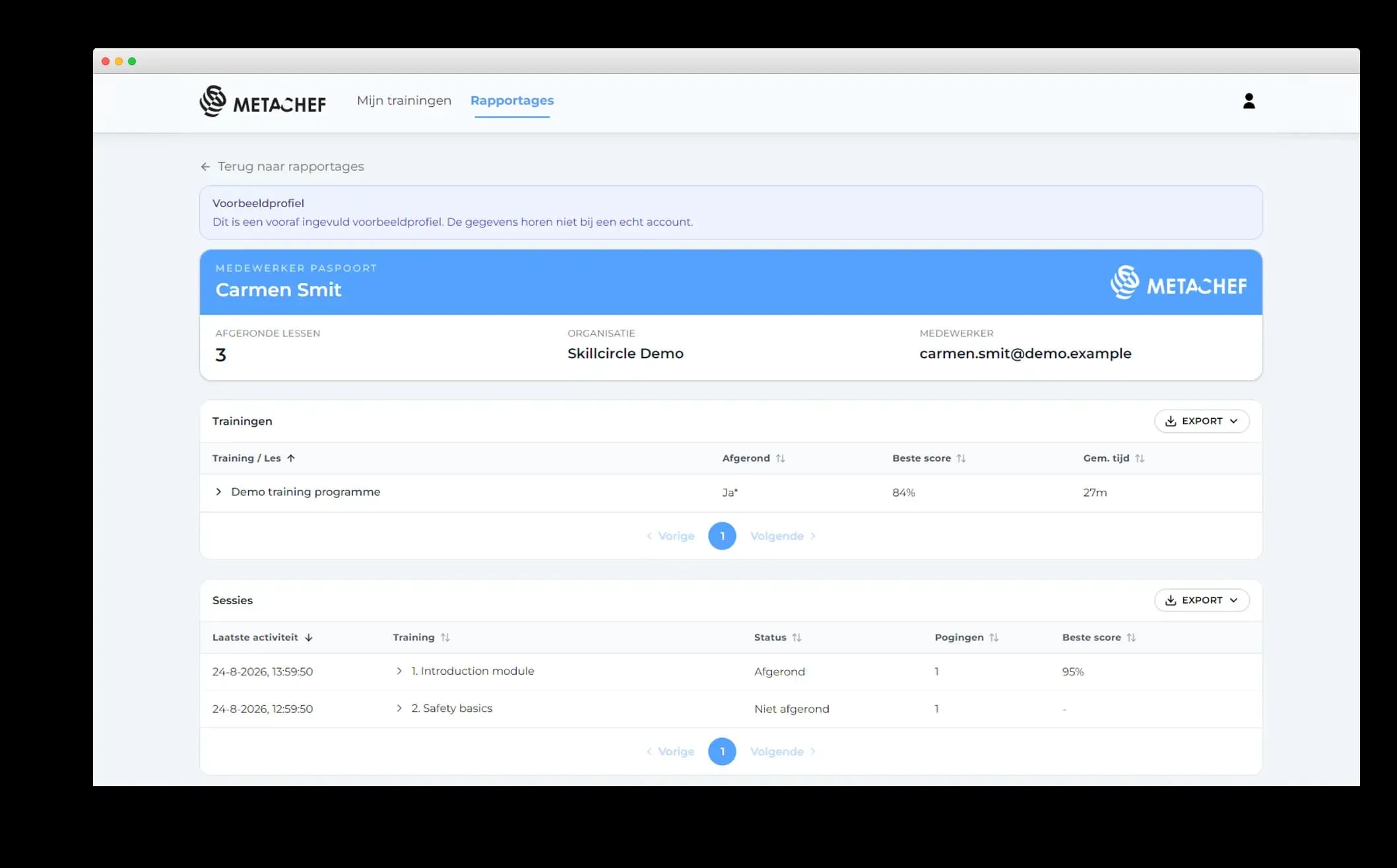
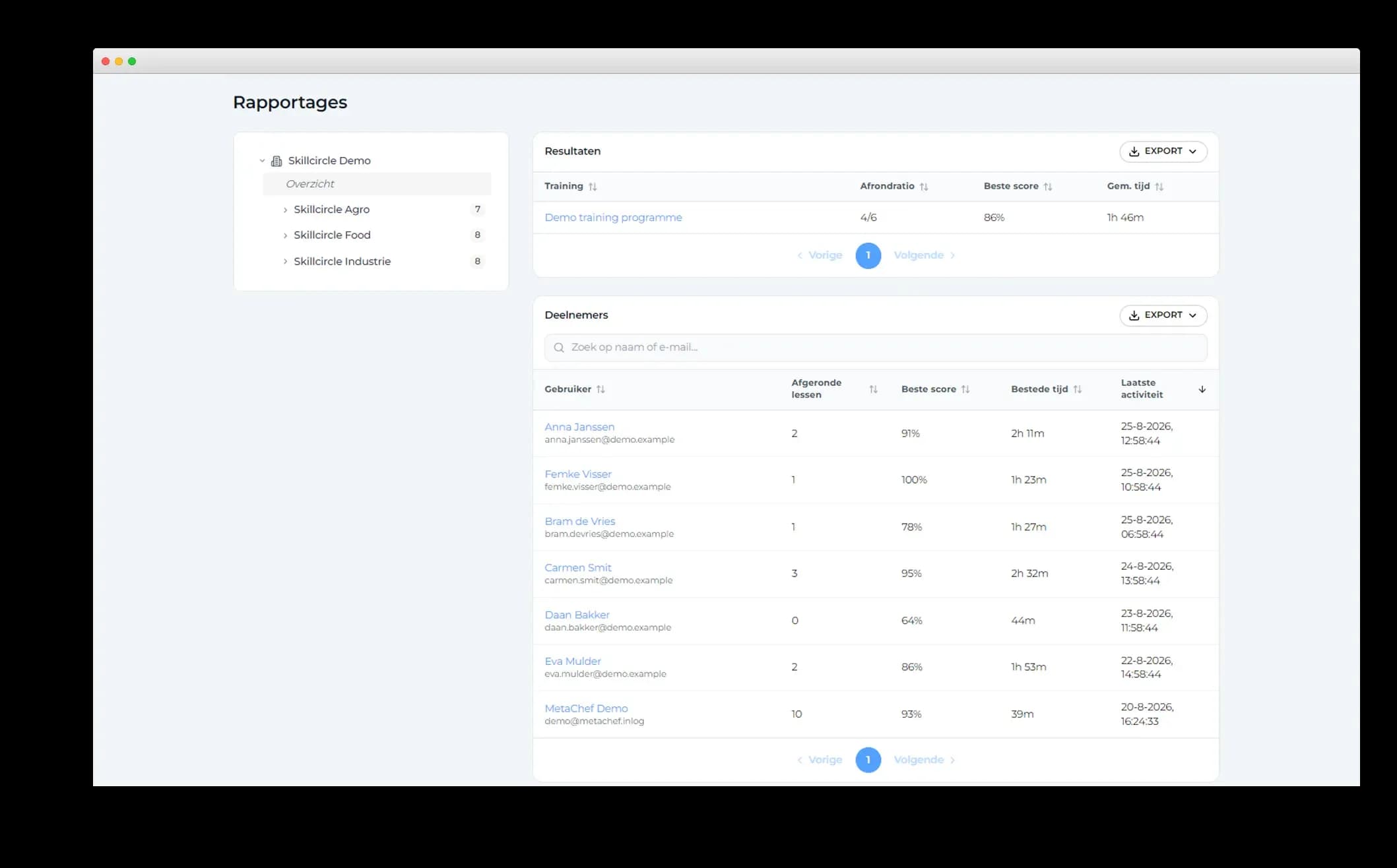
The MetaChef portal shows which training each employee completed, how much time they spent and their knowledge-check scores. Export reports as CSV or PDF, ready to use for the Netherlands Labour Authority, your insurer, risk-assessment follow-up or audits. This shows that your drivers have not just obtained a certificate at some point, but have also received demonstrable instruction on the risks at your workplace.
Multilingual safe driving with transport equipment training on any phone
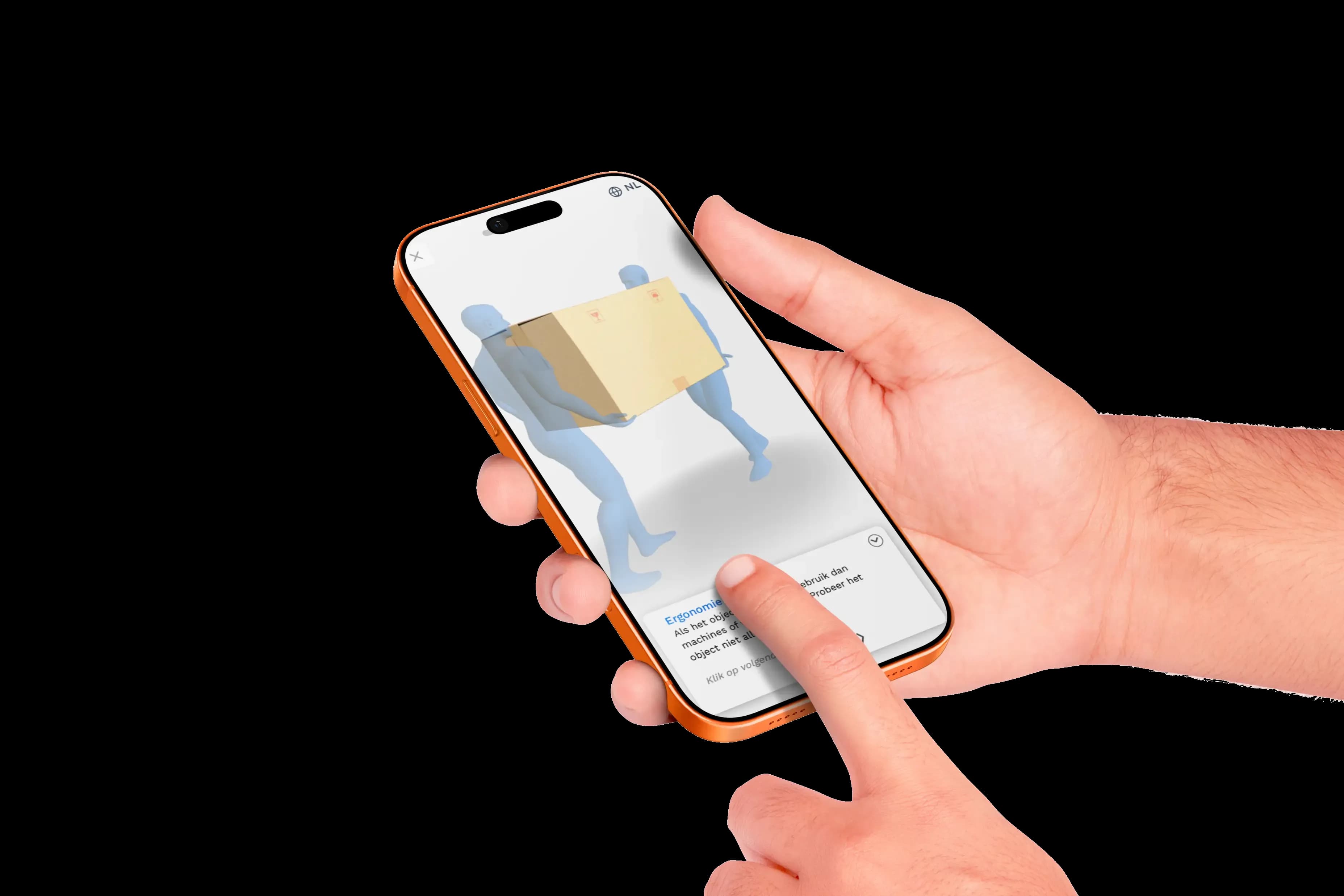
The training is fully mobile, with no computer, classroom or supervisor required. The multilingual instruction is accessible to employees with different language and literacy levels. The 3D visuals show situations you cannot safely practise in real life, such as a moving trailer, so the material is clear even for people with limited literacy. Temporary workers can even complete it before their first working day.
Do your drivers use different types of forklifts, reach trucks or order pickers? Combine this module with visual 3D work instructions for daily checks and operation per vehicle.
Language support
Multilingual
For everyone
Suitable for limited reading skills
Fully mobile
No computer or classroom needed
Independent
No supervisor required
User analytics
Insight into each employee's progress
Standalone or modular
Combine exactly what fits





Start this week
Skillcircle is ready to go: in week one, we configure accounts and the connection to your HR or planning system; in week two, the first employees go live. From then on, you train continuously and repeat instruction where the data shows it is needed.
Week 1
Set up
Create accounts and set up the connection with HR or planning system.
Week 2
Go live
First employees go live.
Ongoing
Keep training
Repeat training for audits, new tasks or after incidents. Use data and feedback to make targeted adjustments.
See how it works
Book a demo and explore the safe driving with transport equipment training alongside the rest of the Skillcircle programme.
Frequently asked questions about safe driving with transport equipment
Is a forklift certificate mandatory?
No, a forklift certificate is not a legal requirement in the Netherlands. However, the Dutch Working Conditions Decree requires that only employees with appropriate training drive a forklift or other self-propelled transport equipment, and the Working Conditions Act (Article 8) requires you to provide demonstrable instruction on the risks. Employees may drive independently from the age of 18; younger employees may only drive under expert supervision. In practice, insurers and clients often do ask for a certificate. This training complements it with instruction tailored to your workplace and records the evidence for each employee.
How often should forklift drivers receive refresher training?
The law sets no fixed period. In practice, a forklift certificate is usually valid for five years, but instruction must stay up to date: with a new type of transport equipment, a new workplace, after an incident or when you notice bad habits creeping in. With this training, you repeat instruction exactly where it is needed, without taking anyone off the floor for a day.
What should a driver do if the forklift tips over or gets stuck?
Stay seated, with the seat belt fastened. Anyone who tries to jump out runs the greatest risk of getting trapped under the overhead guard or the forklift itself. Hold the steering wheel firmly, brace your feet and lean away from the side the forklift is falling towards. This only works if the seat belt was already fastened, which is why this training starts there, before the first metre.
How do you prevent a trailer from pulling away during loading or unloading?
With agreements and technology. Use a dock traffic light that only turns green when the trailer is properly docked, or wheel chocks if there is no traffic light. Note that a trailer can also slowly creep forward without a driver, due to the forklift's movements. So teach your drivers never to enter a trailer on red or when in doubt, and to stop immediately if they feel movement. And make sure nobody rushes them, not even the team leader: time pressure is the biggest risk factor at the dock.