Sector-specific hazards training
A freezer at -25°C, a steam pipe, a boning knife and a bucket of concentrated cleaning agent: in the food industry, the hazards are part of the work itself. Yet instruction often consists of ‘just watch how your colleague does it’. Dutch health and safety law requires more: every employee must receive demonstrable instruction. For employers, that means two things: employees who protect themselves against cold, heat, knives and chemicals, and proof that the instruction was provided.
Skillcircle's Sector-specific hazards training delivers both. Employees see in 3D how to work safely, from the freezer to cleaning. You can see who completed the training. Use the module on its own or as part of the complete onboarding and safety training in 3D.
Dealing safely with sector-specific hazards
Not a theory book, but the safety rules for the four situations where things go wrong, shown step by step:
Working in cold conditions
Protect yourself in cold areas such as the freezer with the right warm clothing, so you don't get hypothermia or frostbite. Don't stay longer than necessary: cold makes your fingers stiff and your reactions slower, even if you don't notice it yourself.
Working in hot and steamy conditions
Keep your distance from hot equipment and steam pipes to avoid burns. Don't stay in hot areas longer than necessary, to prevent overheating.
Using knives and sharp tools
Only use company knives, always wear cut-resistant gloves and always cut away from yourself, never towards you. After use, the knife goes back in the holder, never loose on the work table.
Working with cleaning agents
Only use the right product, always read the label first and wear the prescribed protective equipment, so the product never touches your bare skin. Always wash your hands after use to prevent irritation or poisoning.
Demonstrable for every inspection and audit
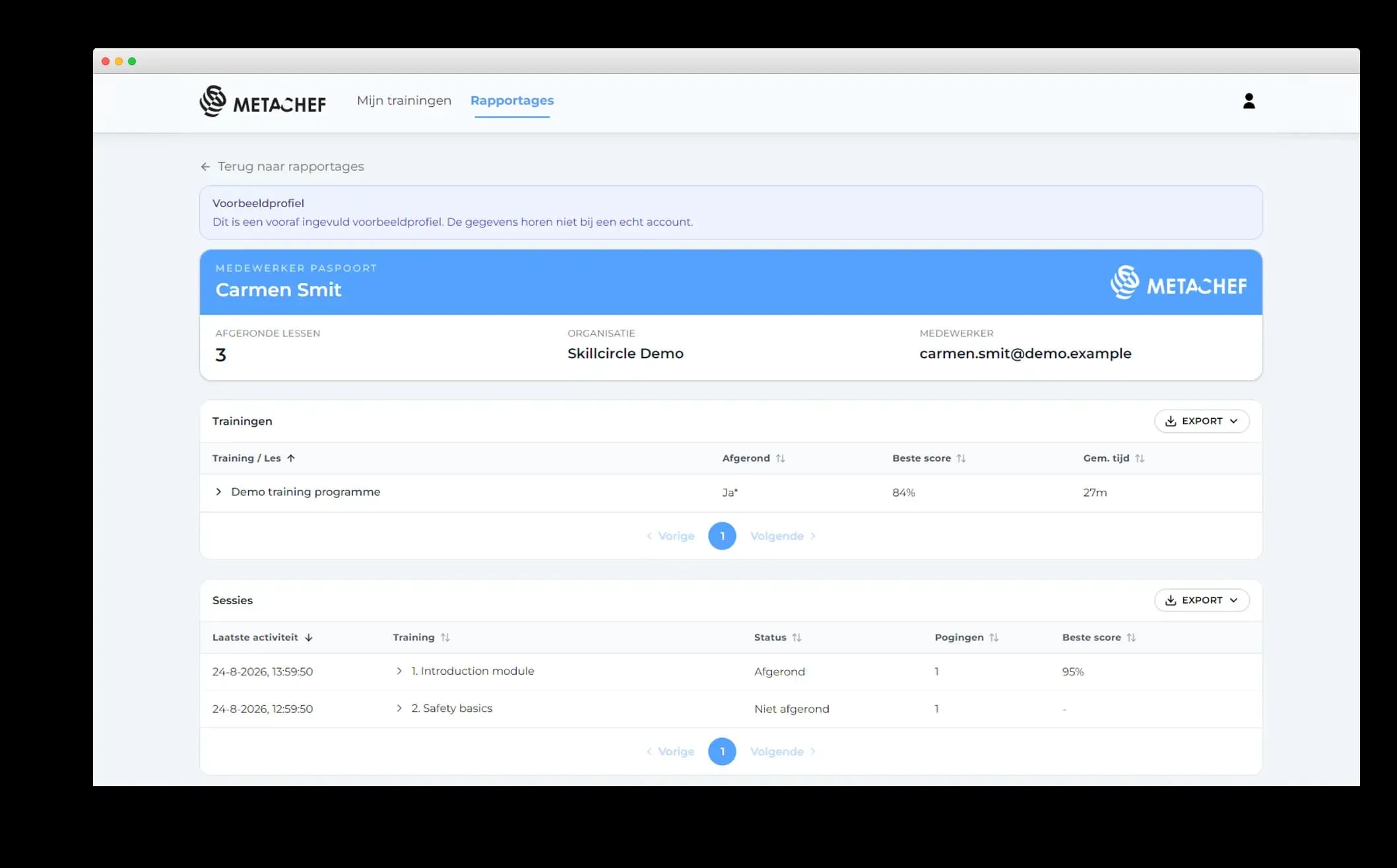
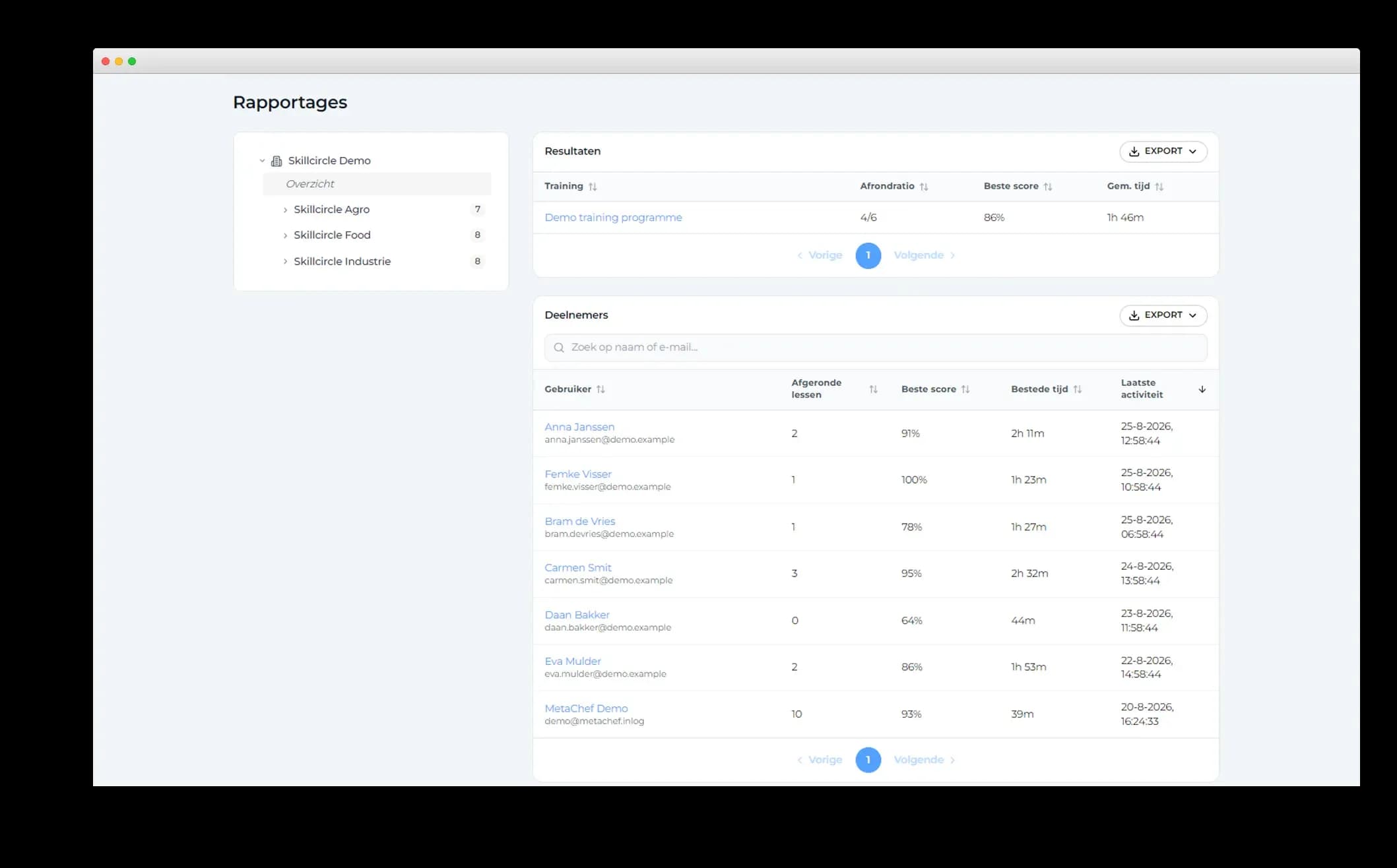
The MetaChef portal shows which training each employee completed, how much time they spent and their knowledge-check scores. Export reports as CSV or PDF, ready to use for the Netherlands Labour Authority, BRCGS and IFS audits or risk-assessment follow-up. This helps you fulfil the information obligation under Dutch health and safety law, including for working with hazardous substances.
Multilingual sector-specific hazards on any phone
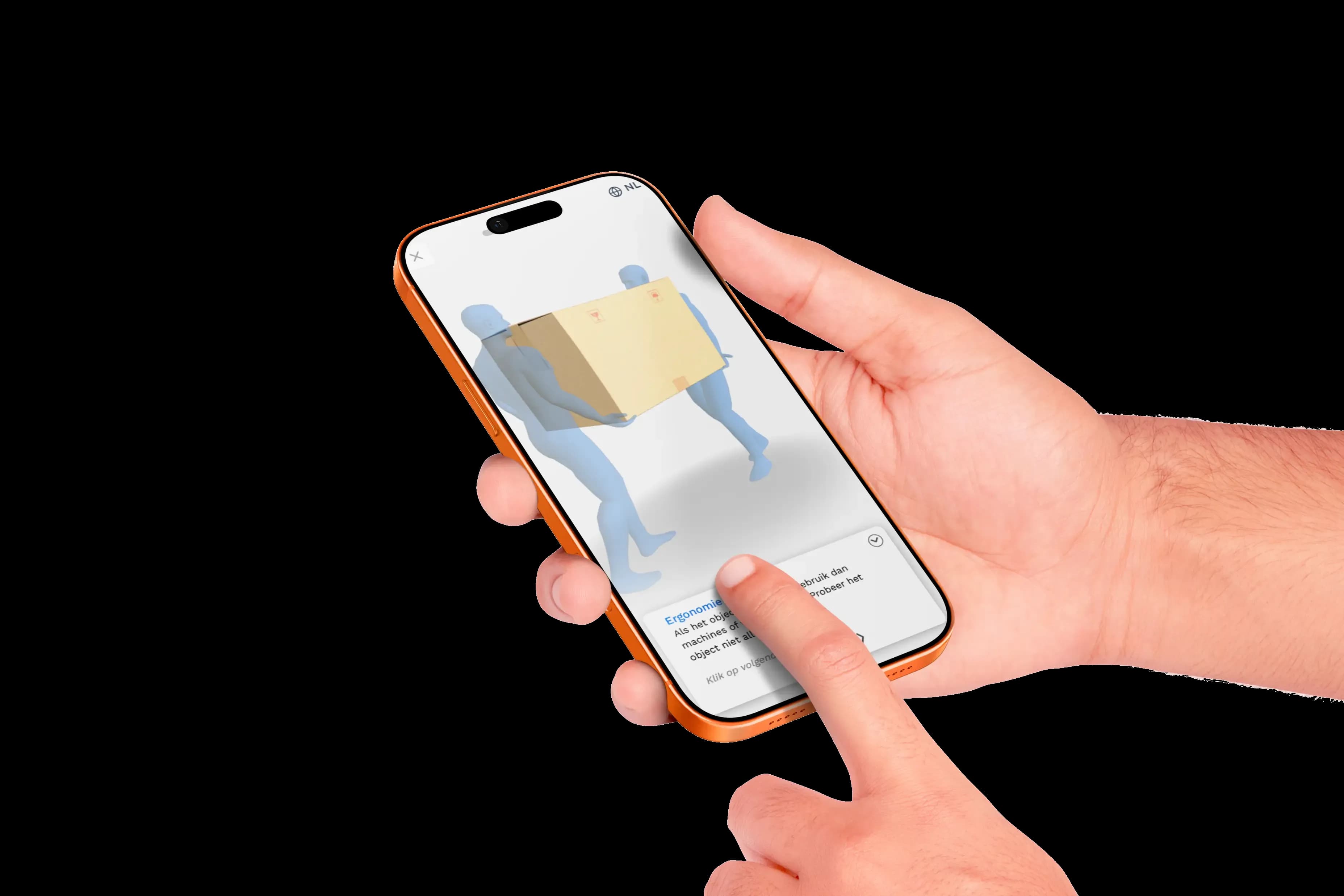
The training is fully mobile, with no computer, classroom or supervisor required. The multilingual instruction is accessible to employees with different language and literacy levels. The 3D visuals show exactly how to handle a knife or read a label, so the material is clear even for people with limited literacy. Temporary workers can even complete it before their first working day.
Does each department have its own knives, cleaning agents or cleaning procedures? Combine this module with visual 3D work instructions for the right working method at the workplace itself.
Language support
Multilingual
For everyone
Suitable for limited reading skills
Fully mobile
No computer or classroom needed
Independent
No supervisor required
User analytics
Insight into each employee's progress
Standalone or modular
Combine exactly what fits





Start this week
Skillcircle is ready to go: in week one, we configure accounts and the connection to your HR or planning system; in week two, the first employees go live. From then on, you train continuously and repeat instruction where the data shows it is needed.
Week 1
Set up
Create accounts and set up the connection with HR or planning system.
Week 2
Go live
First employees go live.
Ongoing
Keep training
Repeat training for audits, new tasks or after incidents. Use data and feedback to make targeted adjustments.
See how it works
Book a demo and explore the sector-specific hazards training alongside the rest of the Skillcircle programme.
Frequently asked questions about sector-specific hazards
Is instruction on these hazards mandatory?
Yes. The Dutch Working Conditions Act (Article 8) requires employers to provide effective information about the risks of the work and the measures taken against them. For cleaning agents, the rules on hazardous substances in the Working Conditions Decree (Chapter 4) also apply: employees must know the risks of a product and how to protect themselves, and the safety data sheets must be available to them. A certificate is not required, but demonstrable instruction is. This training provides that instruction and records the evidence for each employee.
How long can an employee work in a freezer?
Dutch law sets no fixed maximum. What is acceptable follows from your risk assessment and often from the occupational health and safety catalogue for your sector. The Dutch poultry sector catalogue, for example, specifies a maximum of 45 consecutive minutes at -20°C, followed by a 10-minute break at room temperature, and a maximum of 4 hours a day below -10°C. It is important that employees recognise the signs of hypothermia themselves and leave the cold in time.
Which cut-resistant gloves are needed?
That depends on the work. Cut-resistant gloves are tested according to the European standard EN 388, which rates cut resistance from A (low) to F (high). Deboning and other work with a boning knife often require a metal chain mail glove. Record which glove belongs to which task in your risk assessment, and make sure employees know the difference and always pick the right one.
What should an employee do with a burn or a cut?
Cool a burn immediately for at least ten minutes under lukewarm, gently running water. For a cut, apply pressure with a clean bandage. For a larger or deep wound, always call a first aider or a doctor. In the food industry, the wound is then covered with a detectable blue plaster before returning to work. Report every incident to your supervisor so the cause can be addressed.