Food quality control training
A recall rarely starts big: it starts with a crooked label or a seal that isn't quite closed. Yet quality instruction often consists of a specification sheet by the line. The law asks for more: you are responsible for every product that leaves your business. For employers, that means two things: employees who spot a deviation before your customer does, and proof that the instruction was provided.
Skillcircle's Food quality control training delivers both. Employees learn in 3D to recognise deviations in products and packaging, and what to do next. You can see who completed the training. Use the module on its own or as part of the complete onboarding and safety training in 3D.
Quality standards in the workplace
Not a folder full of regulations, but the key procedures that matter most in the food industry:
Why check?
A crooked label, missing contents, an unusual appearance or the wrong weight: every error that leaves the line ends up with the customer. Understand why your check makes the difference, even when a product ‘almost looks right’.
Recognising product deviations
The wrong colour, an unusual shape, damage or a texture that isn't right: recognise it immediately. Always look, feel and compare against the standard or reference product, not against the product that just passed by.
Recognising packaging deviations
An open seal, a bloated pack, moisture or leakage, dirty packaging or an error in the print or label: all reasons not to let a product through. A bloated pack can indicate spoilage, so never put it back on the line.
Responding to deviations
Spotted a deviation? Set the product aside immediately so it doesn't end up in the box after all. Stop and report it to your supervisor or the quality department, and register the product according to your company's procedure. Never correct it yourself and keep working, not even when in doubt.
Demonstrable for every inspection and audit
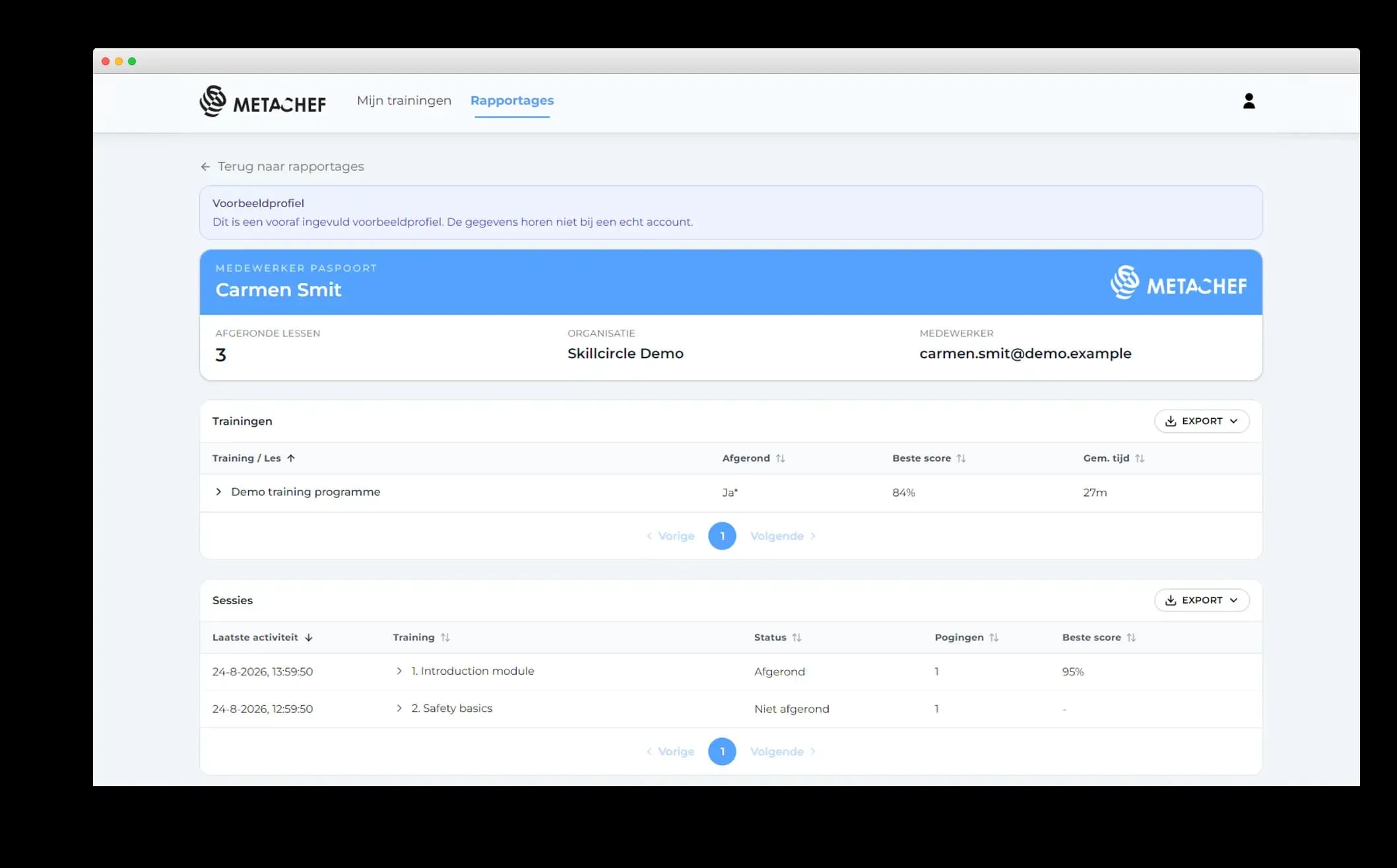
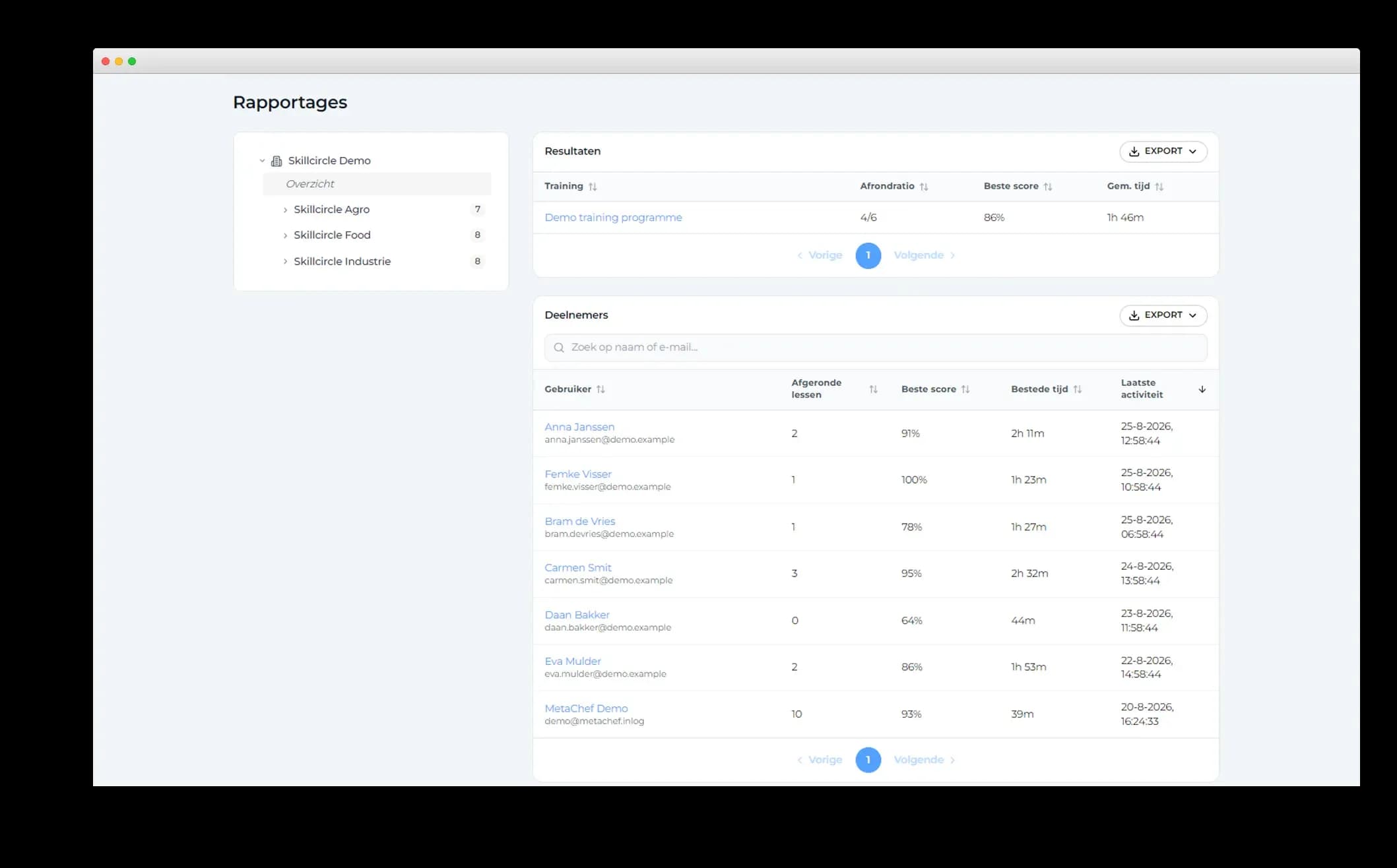
The MetaChef portal shows which training each employee completed, how much time they spent and their knowledge-check scores. Export reports as CSV or PDF, ready to use for BRCGS and IFS audits, customer audits or customer reports. This shows concretely that the employees who assess products and packaging have been trained to do so, exactly what BRCGS and IFS ask for.
Multilingual food quality training on any phone
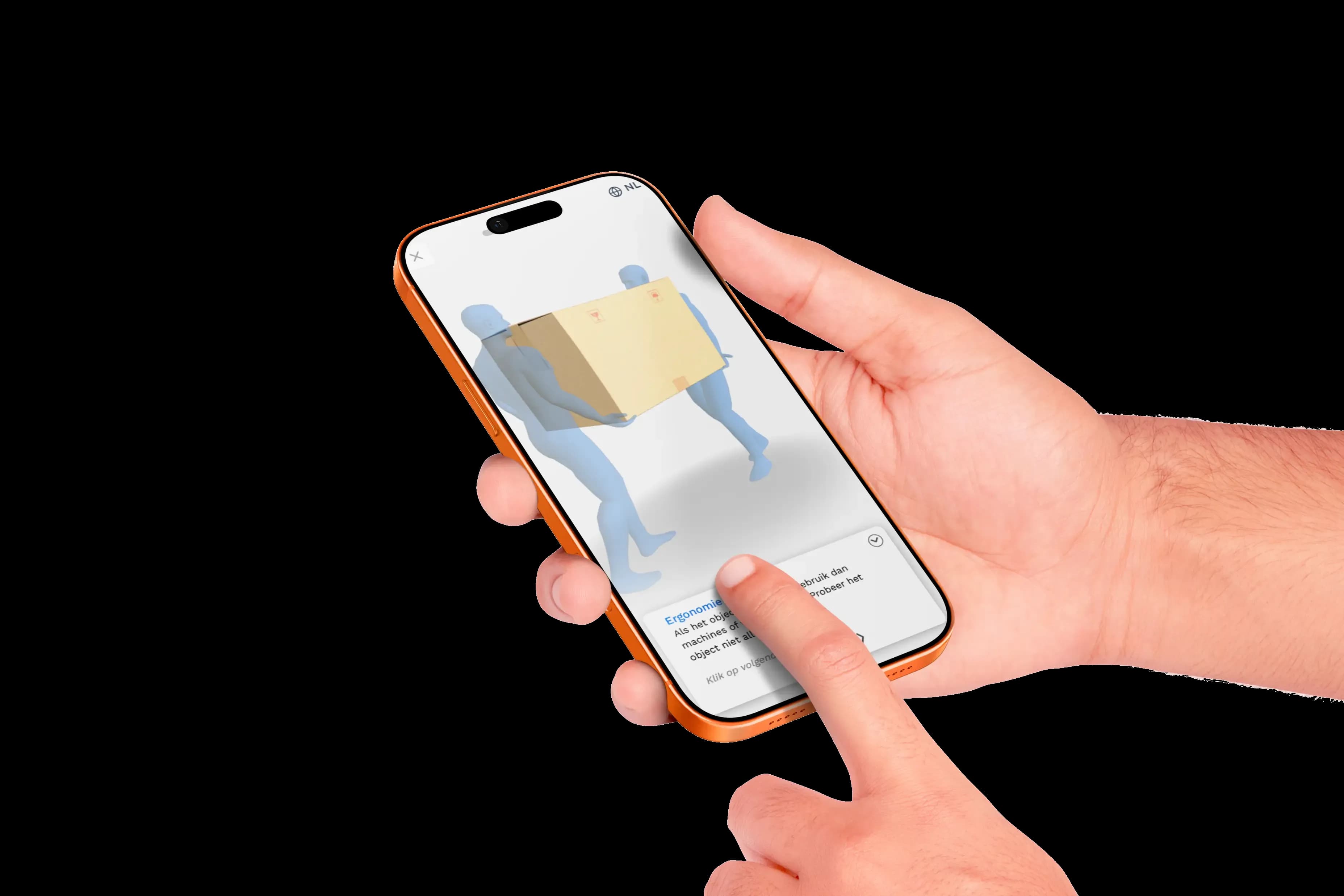
The training is fully mobile, with no computer, classroom or supervisor required. The multilingual instruction is accessible to employees with different language and literacy levels. The 3D visuals show exactly what a good and a deviating product look like, so the material is clear even for people with limited literacy. Temporary workers can even complete it before their first working day.
Does each product or line have its own quality requirements? Combine this module with visual 3D work instructions for checkpoints per product, at the workplace itself.
Language support
Multilingual
For everyone
Suitable for limited reading skills
Fully mobile
No computer or classroom needed
Independent
No supervisor required
User analytics
Insight into each employee's progress
Standalone or modular
Combine exactly what fits





Start this week
Skillcircle is ready to go: in week one, we configure accounts and the connection to your HR or planning system; in week two, the first employees go live. From then on, you train continuously and repeat instruction where the data shows it is needed.
Week 1
Set up
Create accounts and set up the connection with HR or planning system.
Week 2
Go live
First employees go live.
Ongoing
Keep training
Repeat training for audits, new tasks or after incidents. Use data and feedback to make targeted adjustments.
See how it works
Book a demo and explore the food quality control training alongside the rest of the Skillcircle programme.
Frequently asked questions about food quality control
Is quality control training mandatory?
There is no legal requirement for one specific course, but there is a responsibility that carries a lot of weight. The General Food Law Regulation (EC) 178/2002 makes you, as a producer, responsible for ensuring your products comply with the law, from safety to labelling. BRCGS and IFS also require employees whose work affects product safety, legality and quality to be demonstrably trained. A certificate is not required, but demonstrable instruction is. This training provides that instruction and records the evidence for each employee.
Does the training replace our product specifications and rejection criteria?
No, it lays the foundation for them. The training teaches employees how to check: look, feel, compare and report. You explain what the standard is for each product, such as colour, weight tolerance, seal requirements or the correct label, in your own specifications and work instructions, for example with visual 3D work instructions per product at the workplace itself.
Who is responsible for quality control: the employee or the quality department?
Both, each with their own role. The quality department sets the standards, takes samples and assesses deviations. But only the employee on the line sees every single product go by. Nobody else can take over that first check: whatever is missed there ends up in the box. The training turns every employee into a reliable first check, so your quality department can focus on solving root causes instead of catching errors.
What should an employee do when in doubt whether a product deviates?
Set it aside and report it, always. A product that is set aside unnecessarily costs a few seconds of extra checking; a product that wrongly goes through can cost a customer complaint or a recall. The training teaches employees that reporting when in doubt is the norm, not a sign of uncertainty. This builds a quality culture in which errors surface early instead of at the customer, which is exactly what BRCGS and IFS look at during an audit.