Training clothing and personal protection
A hairnet that doesn't cover the ears or hearing protection left in a pocket: they seem like details, until there's a hair in the product or someone's hearing is permanently damaged. Yet clothing instruction often consists of a sign at the hygiene station. The law asks for more: employees must know when and how to wear protection. For employers, that means two things: employees who wear the right clothing correctly, and proof that the instruction was provided.
Skillcircle's Clothing and personal protection training delivers both. Employees see in 3D what to wear and when. You can see who completed the training. Use the module on its own or as part of the complete onboarding and safety training in 3D.
Clothing and personal protection in the workplace
Not a theory book, but a step-by-step visual guide to the rules for the four situations where things go wrong:
Getting dressed in the right order
First a new hairnet or hood that covers the ears, plus a beard net if you have facial hair. Only then do you put on your work clothing, with your work shoes always last. This keeps hair and dirt off clean clothing.
Breaks and the end of your shift
Going on a break or finishing your shift? Take off your coat and throw away your hairnet and beard net. After the break, start again with a new net, in the right order.
Situational protection
Extra protection where the work requires it: hearing protection in noisy areas, safety glasses where there is a risk of splashes, a face mask in high-risk production areas and blue gloves for direct contact with product. An apron for dirty or wet work, and thermal or warm clothing for cold work.
Clothing rules
No personal caps or hats, keep work clothing closed and tuck hoods and scarves underneath. Never wear your work coat outside or in the canteen. Store personal and work clothing separately, and always wear clean work clothing and approved shoes.
Demonstrable for every inspection and audit
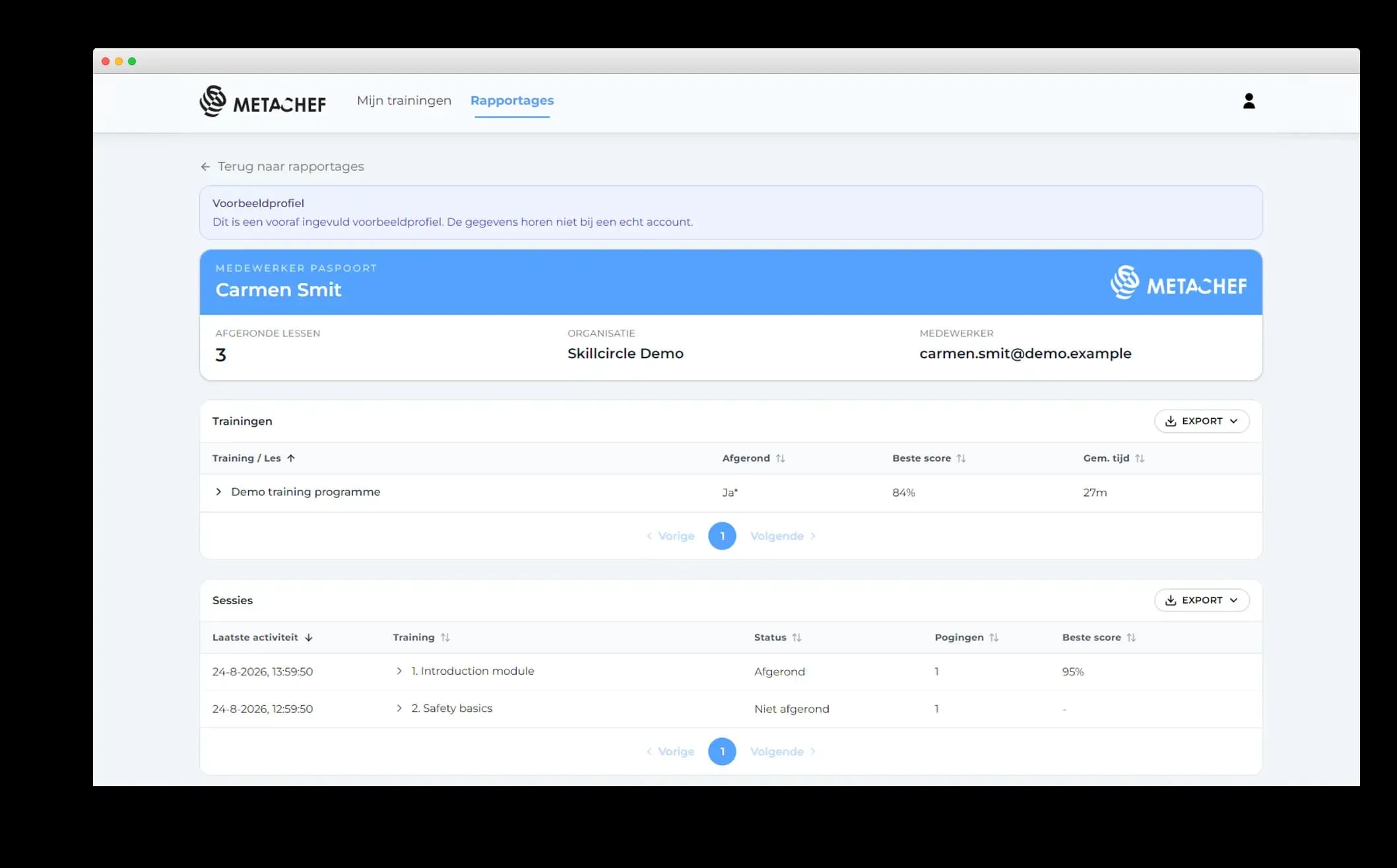
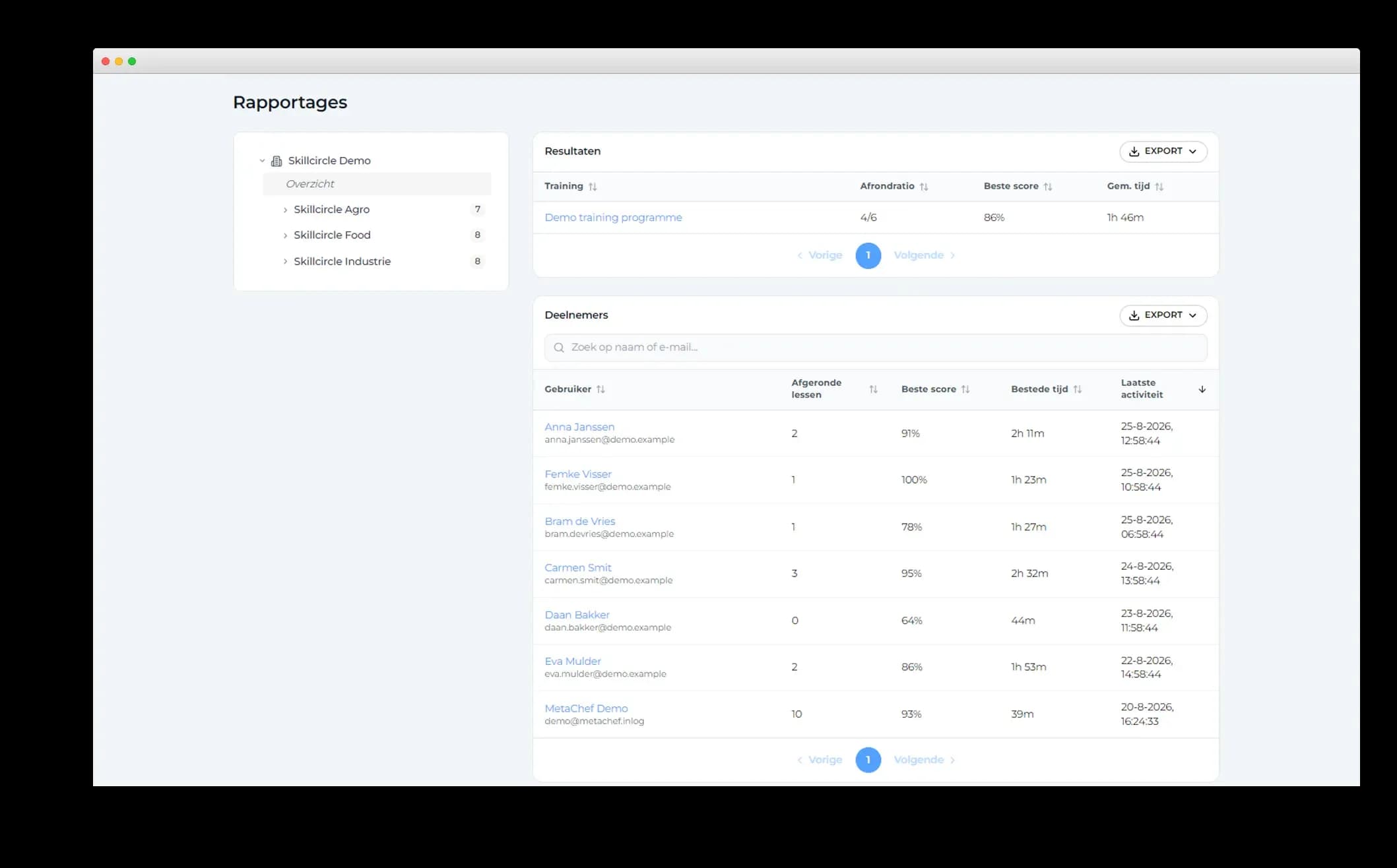
The MetaChef portal shows which training each employee completed, how much time they spent and their knowledge-check scores. Export reports as CSV or PDF, ready to use for the Dutch Labour Authority, BRCGS and IFS audits or risk-assessment follow-up. This helps you fulfil the obligation under Dutch health and safety law to instruct employees on personal protective equipment, as well as the clothing requirements of the hygiene regulation.
Multilingual clothing and personal protection training on any phone
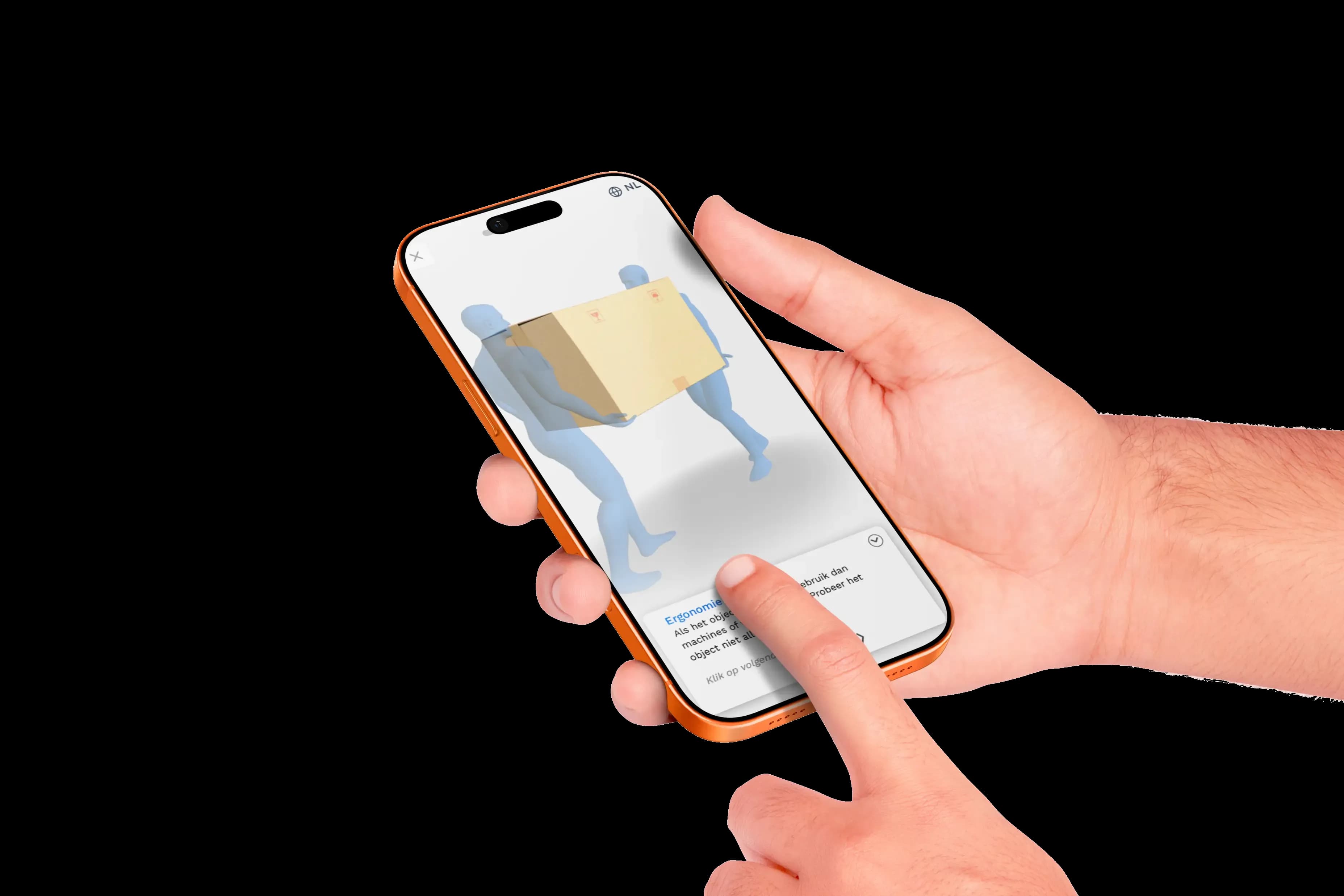
The training is fully mobile, with no computer, classroom or supervisor required. The multilingual instruction is accessible to employees with different language and literacy levels. The 3D visuals show exactly what to wear and when, so the material is clear even for people with limited literacy. Temporary workers can even complete it before their first working day.
Do different departments or zones have different clothing requirements? Combine this module with visual 3D work instructions for the right protection at the workplace itself.
Language support
Multilingual
For everyone
Suitable for limited reading skills
Fully mobile
No computer or classroom needed
Independent
No supervisor required
User analytics
Insight into each employee's progress
Standalone or modular
Combine exactly what fits





Start this week
Skillcircle is ready to go: in week one, we configure accounts and the connection to your HR or planning system; in week two, the first employees go live. From then on, you train continuously and repeat instruction where the data shows it is needed.
Week 1
Set up
Create accounts and set up the connection with HR or planning system.
Week 2
Go live
First employees go live.
Ongoing
Keep training
Repeat training for audits, new tasks or after incidents. Use data and feedback to make targeted adjustments.
See how it works
Book a demo and explore the clothing and personal protection training alongside the rest of the Skillcircle programme.
Frequently asked questions about clothing and personal protection
Is instruction on personal protective equipment mandatory?
Yes. Under the Dutch Working Conditions Decree (Chapter 8), employers must provide personal protective equipment and inform employees about when and how to use it. The Working Conditions Act (Article 11) in turn requires employees to use it correctly. If you work with food, the hygiene regulation (EC) 852/2004 also requires clean, suitable work clothing. A certificate is not required, but demonstrable instruction is. This training provides that instruction and records the evidence for each employee.
Who pays for work clothing and protective equipment?
As an employer, you provide personal protective equipment, such as hearing protection, safety glasses or safety shoes, free of charge. This also applies to agency workers who work for you. For ordinary work clothing without a protective function, the arrangements are often set out in the collective labour agreement or the terms of employment. In every case, make sure employees know which clothing belongs to which area and task.
When is hearing protection mandatory?
From a noise level of 80 dB(A), you must make hearing protection available. From 85 dB(A), employees must wear it and you mark the area as a noise zone. Hearing damage develops gradually and is irreversible, so it is especially important that employees understand why they wear it, even when the noise starts to feel normal. Your risk assessment shows which areas exceed these limits.
What do I do if an employee doesn't wear their protective equipment?
Providing it is not enough: as an employer, you must also make sure employees actually use their protective equipment. Address employees directly and set out agreements and sanctions in your house rules. In the event of a violation, the Netherlands Labour Authority can fine both the employer and the employee. Employees wear protection most consistently when they understand why, and that is exactly what this training makes visible.Providing it is not enough: as an employer, you must also make sure employees actually use their protective equipment. Address employees directly and set out agreements and sanctions in your house rules. In the event of a violation, the Netherlands Labour Authority can fine both the employer and the employee. Employees wear protection most consistently when they understand why, and that is exactly what this training makes visible.