Basic skills and product safety
A glass splinter, a trace of cleaning agent or traces of nuts in a nut-free product: you often can't see it, but your customer will notice. Yet new employees often only get a few house rules. The law asks for more: anyone working with food must receive demonstrable instruction. For employers, that means two things: employees who recognise hazards in time, and proof that the instruction was provided.
Basic skills & product safety in the workplace
Not a folder full of regulations, but a step-by-step guide to the key processes in the food industry:
Recognising hazards
You can't always see a hazard in the product: think of pathogens such as viruses and moulds, hard particles such as glass or wood, chemical residues and allergens. Allergens can be life-threatening for some people and can get into a product through cross-contamination, the wrong recipe or the wrong label, for example.
Responding to hazards
Spotted a hazard? Stop immediately, set the product aside and never decide for yourself whether it is still good. Report it to your supervisor straight away, because the problem may also be in other products, and wait for instructions before you continue.
Preventing contamination
Wash your hands, keep your workstation clean and don't eat on the production floor, and always keep raw and prepared products separate: separate lines, rooms and materials. Cover open products, check the colours or the board when cleaning and clean your workstation extra thoroughly at every product changeover.
Storing and handling of products
Know how each product must be stored, because many products need to stay chilled or even frozen. Never put products on the floor, handle them with care and remove damaged or dirty packaging immediately.
Demonstrable for every audit
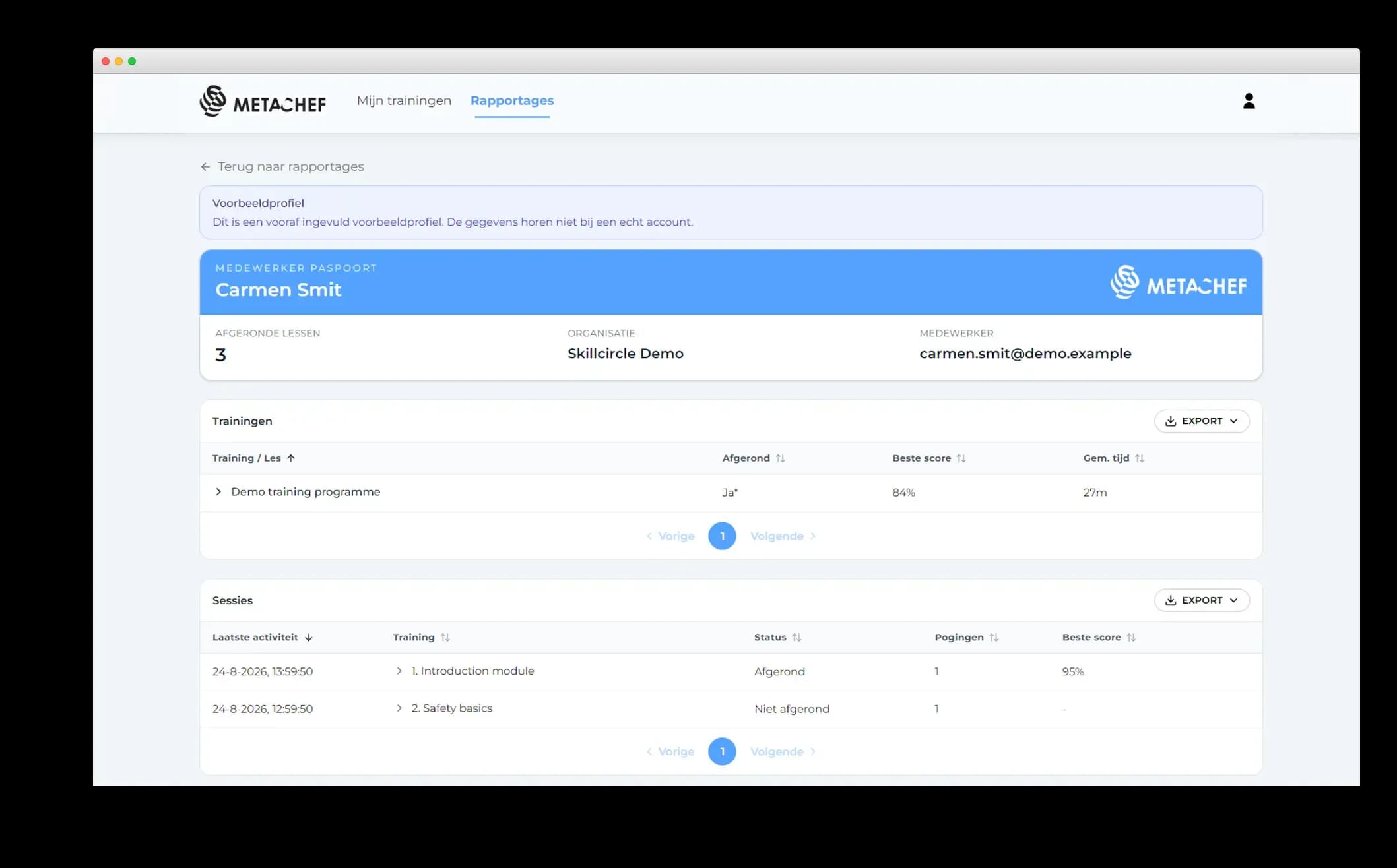
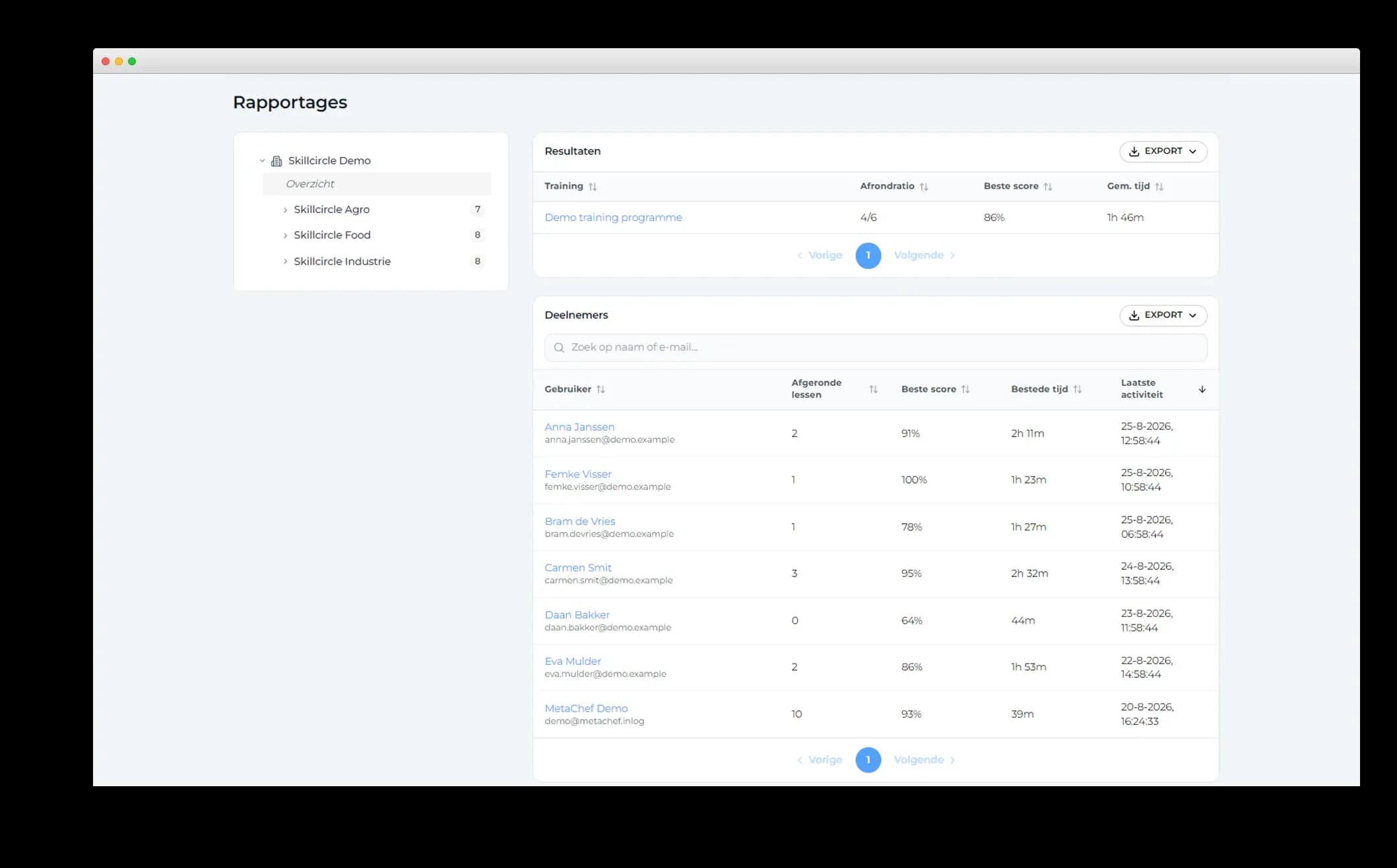
The MetaChef portal shows which training each employee completed, how much time they spent and their knowledge-check scores. Export reports as CSV or PDF, ready to use for BRCGS and IFS audits, customer audits or inspections by the Netherlands Food and Consumer Product Safety Authority (NVWA). This shows that every employee knows the basics of product safety, exactly what the hygiene regulation and your HACCP plan require.
Multilingual basic skills and product safety training on any phone
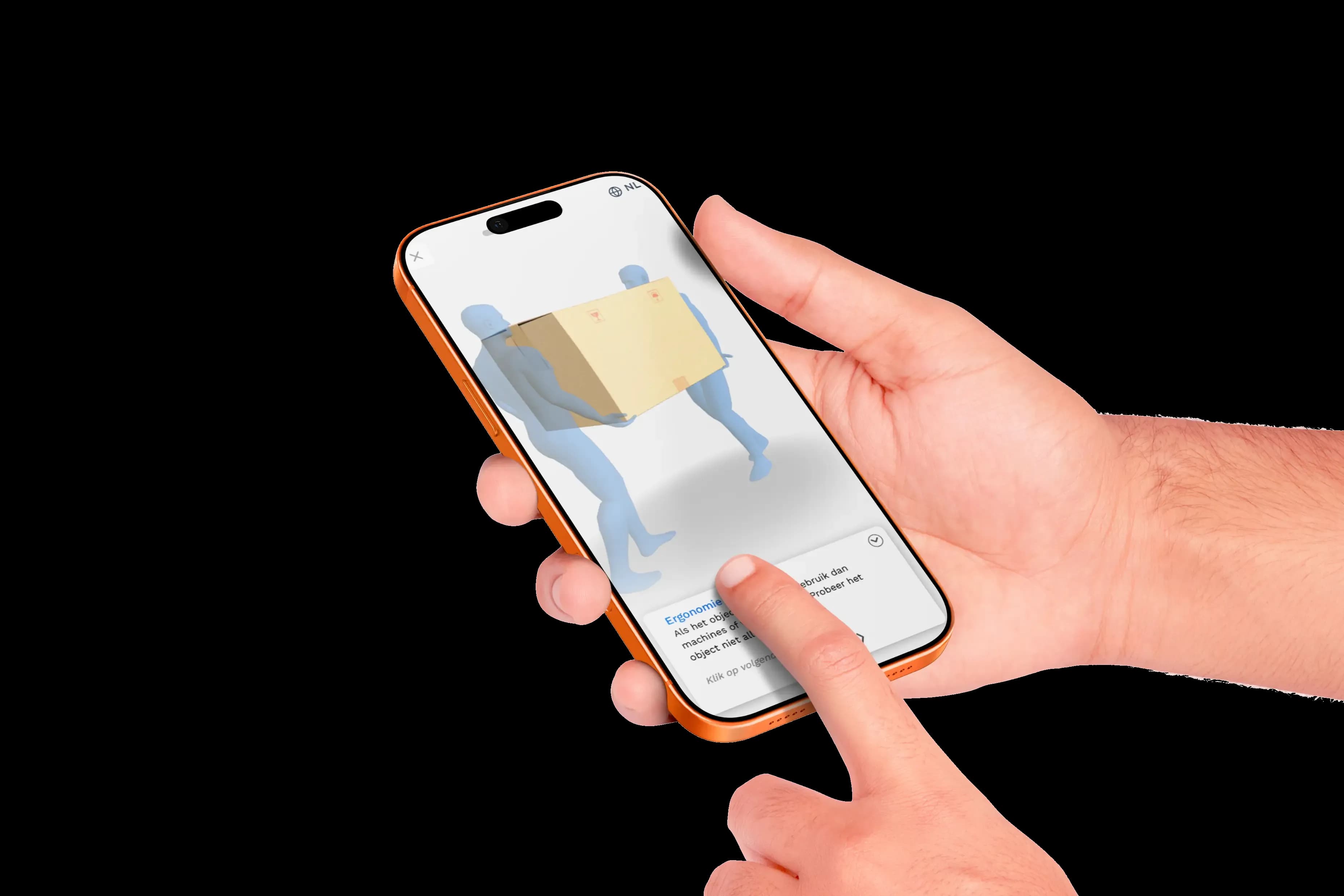
The training is fully mobile, with no computer, classroom or supervisor required. The multilingual instruction is accessible to employees with different language and literacy levels. The 3D visuals make invisible hazards such as cross-contamination visible, so the material is clear even for people with limited literacy. Temporary workers can even complete it before their first working day.
Does each line have its own colour codes, allergen rules or cleaning procedures? Combine this module with visual 3D work instructions for product changeovers and cleaning at the workplace itself.
Language support
Multilingual
For everyone
Suitable for limited reading skills
Fully mobile
No computer or classroom needed
Independent
No supervisor required
User analytics
Insight into each employee's progress
Standalone or modular
Combine exactly what fits


Start this week
Skillcircle is ready to go: in week one, we configure accounts and the connection to your HR or planning system; in week two, the first employees go live. From then on, you train continuously and repeat instruction where the data shows it is needed.
Week 1
Set up
Create accounts and set up the connection with HR or planning system.
Week 2
Go live
First employees go live.
Ongoing
Keep training
Repeat training for audits, new tasks or after incidents. Use data and feedback to make targeted adjustments.
See how it works?
Start your demo and view the basic skills & product safety training yourself, together with the rest of the Skillcircle programme.
Frequently asked questions about basic skills & product safety
What are the four types of food safety hazards?
Microbiological hazards, such as bacteria, viruses and moulds, which spoil products or make people ill. Physical hazards: hard particles such as glass, metal or pieces of wood from a pallet. Chemical hazards, such as residues of cleaning agents or lubricants. And allergens: substances that can be life-threatening for some people, even in small amounts. Your HACCP plan is based on these hazards; this training makes sure every employee recognises them on the floor.
Which allergens must be on the label?
Under the European food labelling regulation (EU) 1169/2011, fourteen allergens must always be declared: cereals containing gluten, crustaceans, eggs, fish, peanuts, soya, milk, nuts, celery, mustard, sesame seeds, sulphur dioxide and sulphites, lupin and molluscs. But a correct label is only reliable if nothing goes wrong on the floor. One wrong recipe or poor cleaning at a product changeover, and the label is no longer accurate.
What is cross-contamination and how do you prevent it?
Cross-contamination is the transfer of bacteria or allergens from one product or surface to another, for example via hands, knives, chopping boards or a line that hasn't been cleaned properly. You prevent it by keeping raw and prepared products strictly separate, with separate lines, rooms and materials, and by working with colour codes. A product changeover is the critical moment: cleaning must always be complete at that point.
Why can't an employee decide for themselves whether a product is still good?
Because you can't always see a hazard in a product, and one deviation rarely stands alone. A glass splinter or a wrong label can mean an entire batch is affected. That assessment belongs to your quality department, following the procedures in your HACCP plan. The employee does what only they can do: stop, set aside and report. The faster that happens, the smaller the damage.