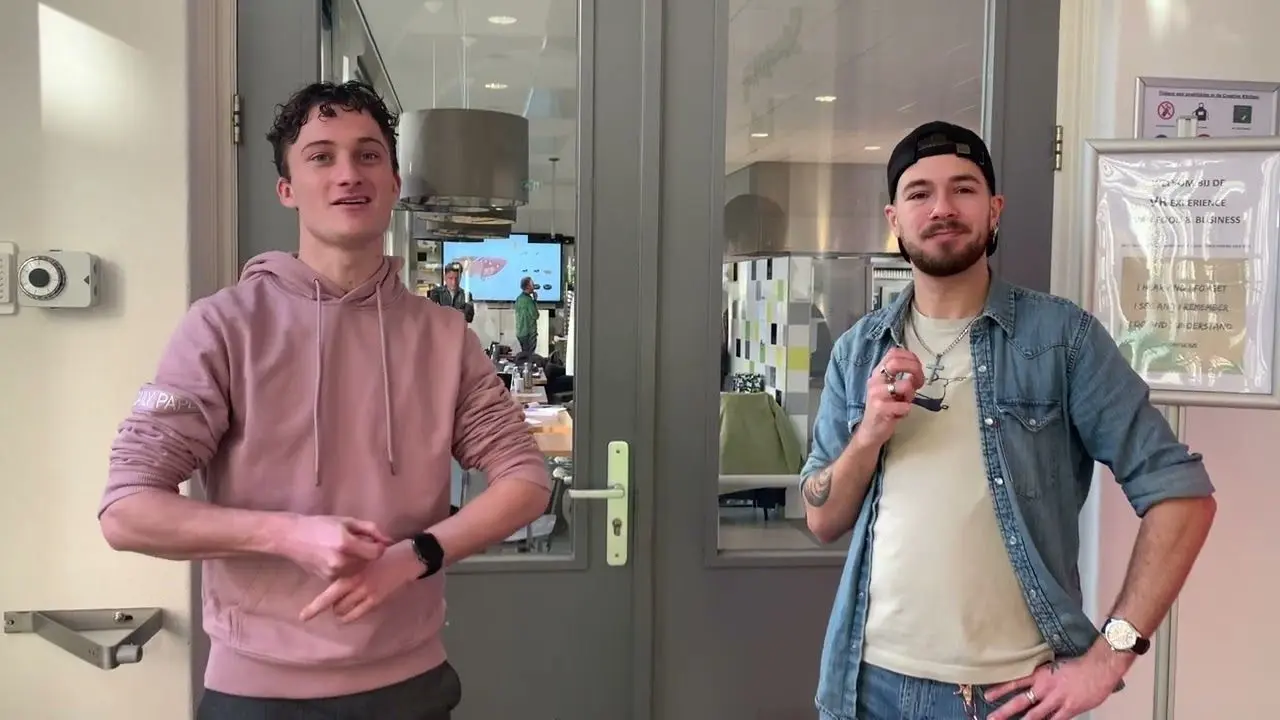
In recent months, lecturers from the HAN Food & Business programme have been working on a VR application that they will use in education. The VR application gives students the opportunity to virtually visit a production site. And it gives them knowledge and insight into a production process in a factory. The VR application is a so-called digital twin of a real physical production site.
Why a virtual factory?
Lecturer Rik Schildkamp noticed that it is becoming increasingly difficult to introduce students to a food production process in a factory. Due to strict hygiene regulations, companies cannot always accommodate a large group of students. And during the Covid-19 lockdowns, students could not visit production sites at all. For students of the Food & Business programme, it is important that they know how food is produced in a factory. If you, as a student, invent a product yourself, you need to know whether what you devise is also applicable in a production process in a factory. And students need to know how they can carry out quality controls in a factory, for example.
Additionally, lecturers sometimes assume that a student already knows what a pasteuriser is or in what order machines are used in a production process. But first-year students often do not know this at all. If a student then does not know what such a machine looks like or how it works, explanations in a lecture can quickly become abstract. All the more reason, therefore, to explore whether students can gain more insight into the food production process in a factory with the help of VR.
Getting started
The MetaChef platform offers many possibilities. The challenge is then not to get lost in all the possibilities and to implement the virtual options in education in a targeted way. That is why the programme organised four workshops together with MetaChef staff. An additional advantage is that the lecturers who participate in the workshops become enthusiastic during the workshops and know what they will be working with in their education.
In the first workshop, the focus was on gaining insight into the programme, policy and interests, working methods, educational content, student profiles, short and medium-term objectives, and possible pitfalls. In short, a multitude of different matters to clarify the right perspective and goal.
Inform and activate
In the second workshop, the group determined the direction. After all, if you want, you can deploy VR in many places and moments in education. But if you introduce a new medium and want it to land successfully in the organisation (both among lecturers and students), it is good to be clear about where you deploy it and with what purpose. The group created a few scenarios where the VR application could add value. The group also explored which production process they want to show in their lectures. The workshop offered every opportunity to look broadly at what the MetaChef platform has to offer. For example, it also contains many products (think of all kinds of vegetables and fruit, meat products, or dairy). And with the platform, you can also delve into labelling and marketing: what do people look at, what do they not see or read, and how could you improve your label. What is on the front of a package and what is on the back. Many choices, therefore. After the extensive tour of the possibilities, the group chose to focus on production and quality control in a cheese factory. The group also decided that if an in-depth theme is added in a subsequent period, it will build on the first VR application.
Digital twin of a cheese factory
The third workshop is about the layout of the cheese factory: what is there, what can you see virtually, and can you, for example, place machines in the correct order in the factory yourself. The workshop is also about education. How does the lecturer use the virtual cheese factory? As a lecturer, you can add touchpoints, for example; when students click on them, they receive information or a question or assignment. During the workshop, there is of course also attention for the management of the application by the programme and support for lecturers during implementation. And they create an explanation of the added value of the VR application for educational policy, what investment it requires, and in what timeframe the programme will implement the application.
Concept, action plan, and implementation
During the fourth workshop, the group presented the concept and action plan to the stakeholders. The lecturers have already developed a first lesson. What a wonderful process to be able to follow. In the coming months, the virtual cheese factory will be programmed and tested. After that, there will be training sessions for the lecturers who will use the application in their education. From September, the application will be implemented in the programme. After the first experiences, the programme can decide whether they want to develop more in-depth VR applications.