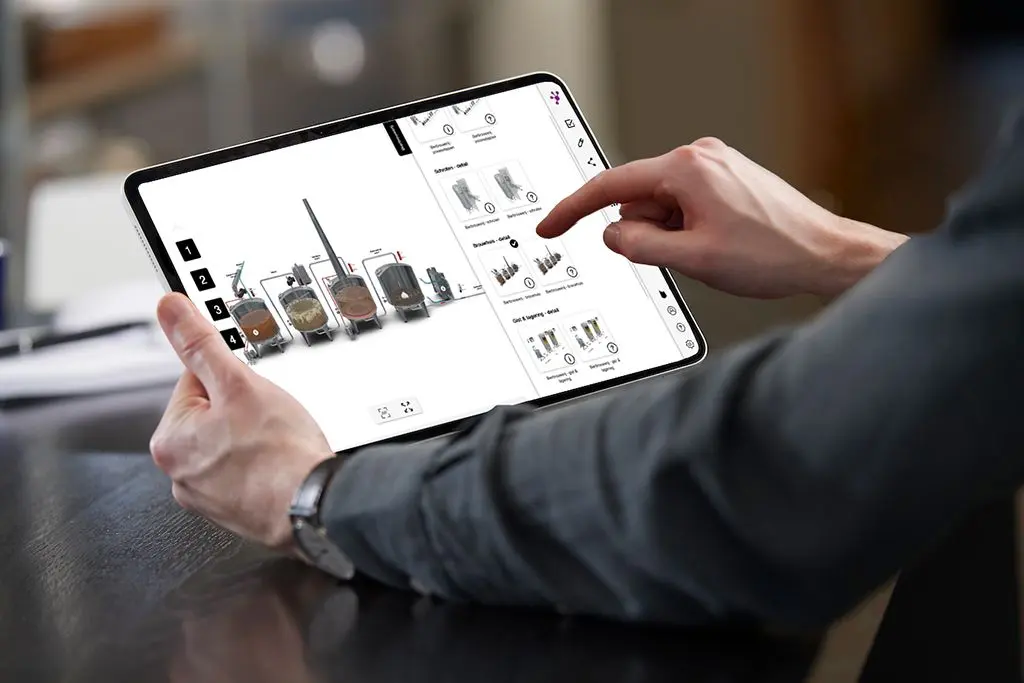
The way we learn is changing at a rapid pace. Traditional learning tools, where students mainly absorb information passively, are increasingly giving way to interactive learning tools that enhance the engagement and effectiveness of education. Digital teaching methods such as Virtual Reality (VR), Augmented Reality (AR), and interactive assignments offer new possibilities to make education more active, insightful, and motivating.
The power of interactive technology in the classroom: why it works
Interactive technology in education offers benefits for both teachers and students. Through the use of interactive learning tools such as VR, AR, interactive assignments, and 3D learning tools, lessons become more lively and relevant. Students become more engaged with the subject matter and are more actively involved in learning, which increases motivation.
Additionally, interactive technology helps teachers explain complex concepts more easily and visually. Abstract topics become tangible, allowing students to gain insight more quickly and understand the material better.
Interactive assignments: active learning with focus and flexibility
Interactive assignments consist of short, targeted learning components in which students actively engage with the subject matter. These assignments make it possible to cover specific topics visually and interactively. Due to the flexible format, students can determine for themselves which components they want to practise more often and which topics they want to revisit later.
Thanks to interactive elements such as quizzes, animations, videos, and assignments, learning becomes more attractive and engaging. Think, for example, of a biology lesson in which students explore the circulatory system by interactively working with a 3D model of the heart. In this way, students learn not only by reading, but especially by doing.
Research shows that interactive learning tools can contribute to better learning outcomes, as students process information more quickly and are more actively involved in the learning process.
VR and AR: the education of the future
VR and AR learning tools are developing at a rapid pace. It is becoming increasingly easier to create fully interactive, virtual learning environments in which students can immerse themselves in the subject matter. This way, complete work processes or practical situations can be simulated.
A good example is visualising process steps within a production factory. In practice, it is often difficult or unsafe to physically guide students around such environments. With VR and AR, this can be done safely and realistically from the classroom. These technologies make practice-oriented learning more accessible and future-proof.
Interactive 3D models as a learning tool: the power of visualisation
Interactive 3D models offer significant benefits within education. They enrich the learning experience by allowing students to actively engage with digital objects. By rotating models, analysing them, and viewing them from different angles, students gain a better understanding of complex concepts.
This form of visualisation helps make abstract topics concrete and understandable. This is particularly valuable in fields such as engineering, biology, and hospitality & catering, where spatial insight and process understanding play an important role.
By integrating 3D learning tools into a digital learning environment, teachers can offer flexible and personalised lessons. Students learn at their own pace and can repeat the subject matter when needed. Moreover, interactive 3D models can be excellently combined with VR and AR, which offers even more possibilities for active and practice-oriented learning.
Would you like to discover how interactive 3D learning tools can enrich your education? Then visit our learning tools page and discover how MetaChef brings interactive learning to life.