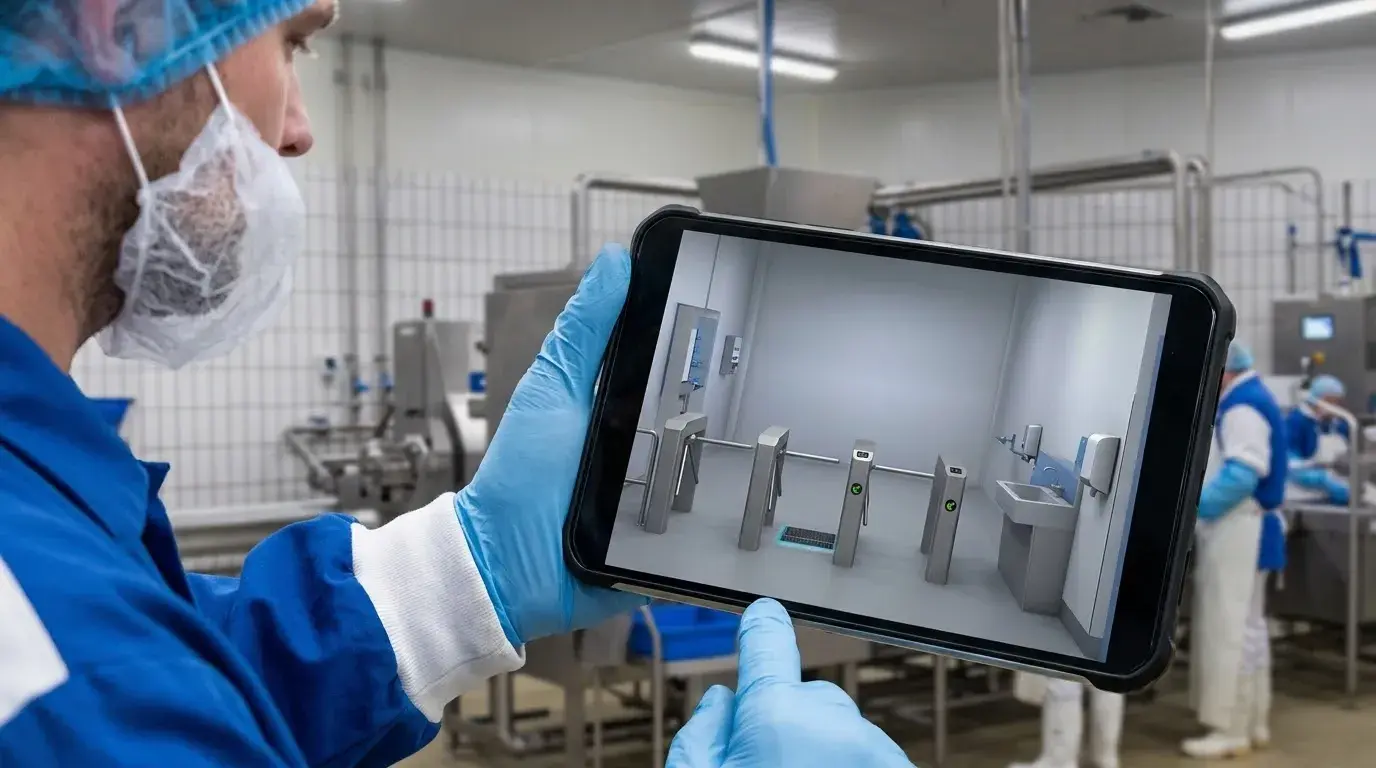
An induction programme for the production floor sets out what a new employee learns, who provides guidance, and when someone can start working independently. For a team with a changing workforce, there is one added requirement: the programme has to work regardless of who is on that shift.
What is an induction programme?
An induction programme is a fixed plan for inducting a new employee. It describes which topics and tasks are covered, who guides the employee, and how you check that the instructions have been understood.
On the production floor, this comes down to very practical matters. Think of wearing the right workwear, the walking route through the factory, moving around the floor safely, and carrying out the first tasks on the line.
Simply signing off that someone has received an instruction is not enough. You also want to know whether the employee understands what to do and can carry it out safely.
Why does a standard induction programme not always work for changing shifts?
Many induction programmes assume one fixed mentor and a clearly defined first working week. On a production floor with a lot of agency workers, things often work differently.
New employees start at different points throughout the month. One day a different team leader is on the shift than the next. And meanwhile, production simply has to carry on.
Language can also play a part. Not every employee reads or speaks Dutch with equal ease. A printed instruction or a brief verbal explanation is not always enough.
The risk is that the explanation comes to depend on whoever happens to be doing the induction at that moment. One team leader explains at length why a certain step matters, while another mainly says what needs to be done.
As a result, two employees who start shortly after one another can begin work with a different foundation.
Three building blocks for an effective induction programme
A good induction programme for a changing workforce does not have to be complicated. Three things make the difference.
1. Secure the fixed base firmly in place
Everything every new employee needs to know can be recorded in advance. Think of clothing, personal hygiene, safety rules and the main routes across the production floor.
Make this information available at the moment the employee needs it, for example on their phone and in several languages.
By using an induction programme with 3D training you can explain a task visually. The employee sees what to do, instead of only reading a text about the task.
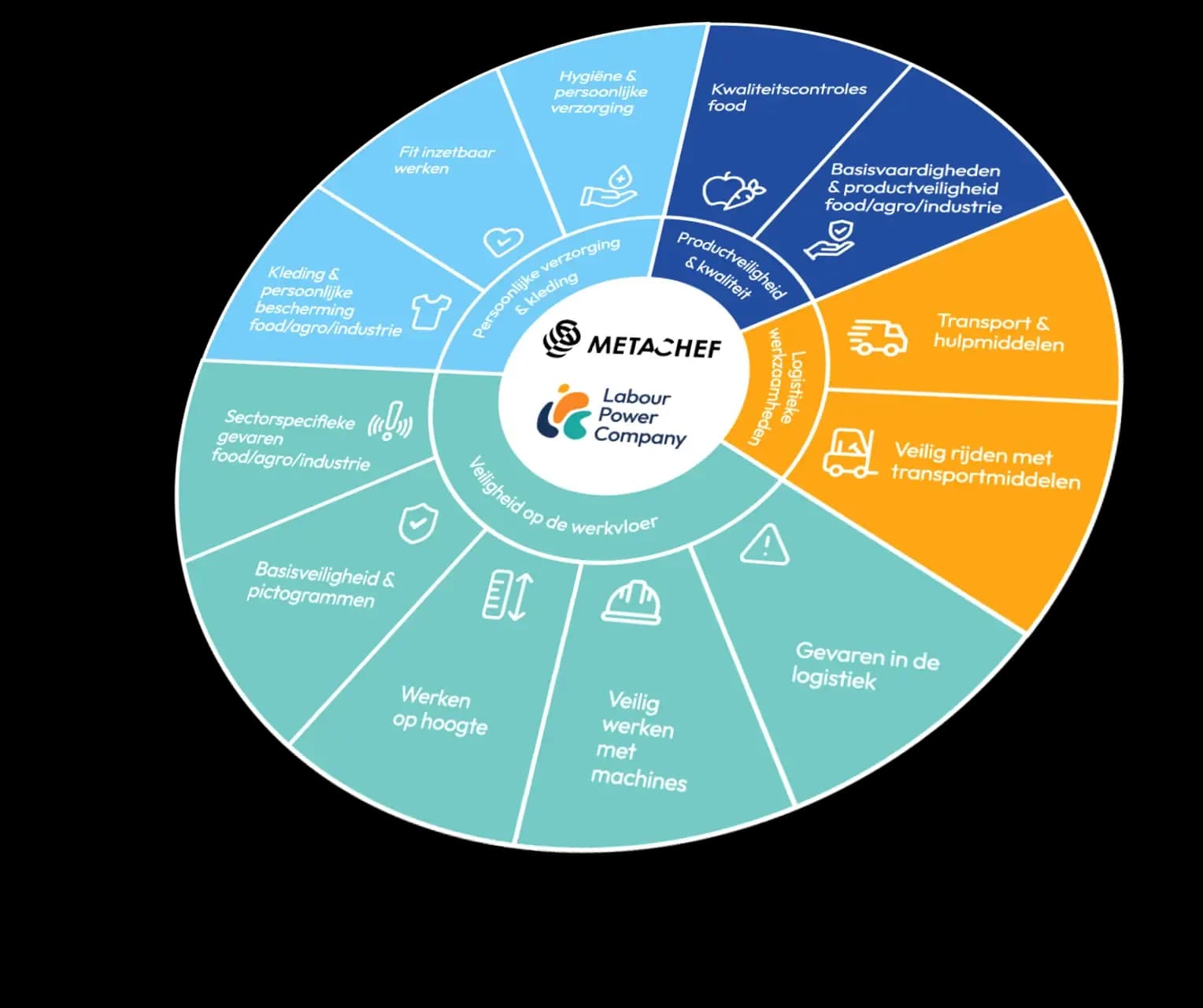
The Skillcircle from MetaChef and Labour Power Company is one example of this. The short 3D training modules have been developed to prepare employees for their work in a practical way.
2. Use the team leader for the practical side
Not everything can be explained digitally. At some point, a new employee has to stand at the line, carry out the task, and receive feedback.
That is where the team leader or an experienced colleague comes in. If the basics have already been explained, time on the shop floor can be used for demonstrating, practising, answering questions and correcting.
That way, the team leader does not have to give the same explanation from scratch every time.
3. Check that the instruction has been understood
An employee may have watched an instruction without knowing exactly what to do.
A short knowledge check helps make that difference visible. It shows you which parts have been understood well and where extra explanation is needed.
You can also record progress, so you can look back later to see which instructions someone has completed.
Example: an induction programme for the first two weeks
An induction programme does not have to be complicated. What matters most is that it is clear in advance what someone learns, who provides guidance and when you check that the instruction has been understood. 3D training can take over part of the fixed basic explanation. That way, a team leader does not have to give every new employee the same practical instructions all over again.
Day 0: Before the first working day
HR or the planner gives the new employee practical information about the first working day. Think of working hours, clothing, and general arrangements.
The employee can already start with the first 3D training modules from the Skillcircle beforehand. These explain practical tasks and instructions step by step. Through the combination of visuals, animation, and short explanations, every new employee starts with the same foundation.
Day 1: Getting to know the production floor
The team leader welcomes the employee and gives a tour of the production floor. This covers, among other things, the clothing and hygiene rules, walking routes, emergency exits, and forklift routes.
Topics that every employee needs to know in the same way can also be offered as a 3D training module. The employee can watch the instruction on a smartphone, tablet, or another suitable device. Close the first explanation with a short knowledge check.
The employee then takes a look at their own workstation. An experienced colleague shows how the work is carried out in practice.
Days 2 and 3: Hands-on practice
The employee starts working under supervision. The experienced colleague focuses mainly on the tasks that can only really be learnt on the shop floor.
For the fixed instructions, the employee can go through the 3D training again. For example, when someone no longer remembers exactly which steps belong to a certain task. This way, an employee can independently return to the instruction whenever needed.
As a result, the team leader or experienced colleague spends less time repeating the same basic explanation and can focus on practising, answering questions and correcting.
Days 4 and 5: Working more and more independently
The employee carries out the work with growing independence. The team leader checks that the tasks are performed correctly and safely.
At the end of the week, there is a short knowledge check. This looks not only at whether the employee has watched the 3D training, but above all at whether the key instructions have been understood and can be applied properly.
Week 2: Revisit and deepen
In the second week, the emphasis is on repetition and deepening knowledge. The employee can follow additional 3D training modules on tasks, quality checks, or situations that occur less often.
The team leader mainly uses the time for the parts that need extra explanation or practice on the production floor. The fixed basic instructions remain available, so the employee can watch them again later as well.
This creates a combination of digital instruction and guidance on the production floor: the 3D training provides a fixed foundation, while the team leader focuses on the practical side.
From induction programme to a fixed process
A good induction programme helps you give new employees the same start, even if the make-up of your team changes every week.
Would you like to induct new employees in a consistent, practical way? Read more about the Skillcircle and the possibilities of 3D training for the shop floor.
Seeing is understanding.