Training werken op hoogte
Maak de veiligheidsregels voor werken op hoogte duidelijk met meertalige 3D-training op de telefoon. Je medewerkers oefenen met situaties rond ladders, steigers, hoogwerkers en daken. Jij ziet per medewerker de voortgang en resultaten.
Veiligheidsregels voor werken op hoogte
Geen theorieboek, maar de veiligheidsregels voor de vier situaties waarin het misgaat, stap voor stap in beeld:
Werken met een steiger
Steigerkaart controleren vóór gebruik (datum én akkoord), belastinggrens kennen, wielen vergrendeld tijdens het werk, en nooit verplaatsen met personen of materiaal erop.
Werken met een ladder
Stabiele ondergrond, de juiste opstelhoek (de 4:1-verhouding), onderkant geborgd of vastgehouden, ladder een meter boven het werkpunt uit, klimmen met drie contactpunten en niet werken vanaf de bovenste drie sporten.
Werken met een hoogwerker
Alleen bedienen met instructie of certificaat, logboek controleren vóór gebruik, harnas en vanglijn aan het ankerpunt in de bak en nooit uit de bak stappen op hoogte.
Werken op daken
Valbeveiliging op alle dakranden óf een harnas aan een gekeurd ankerpunt, lichtstraten en sparingen afgedekt, het dak vóór betreding inspecteren, antislip schoeisel en veilige toegang. Bij ijzel of een nat bitumendak: werk stoppen.
Na de module kan elke medewerker per situatie het juiste hulpmiddel benoemen en onderbouwen waaróm dat de veiligste keuze is. Een kennischeck sluit de training af. Volg de regels niet voor je baas, maar voor jezelf: dat is de boodschap die blijft hangen.
Aantoonbaar bij elke audit
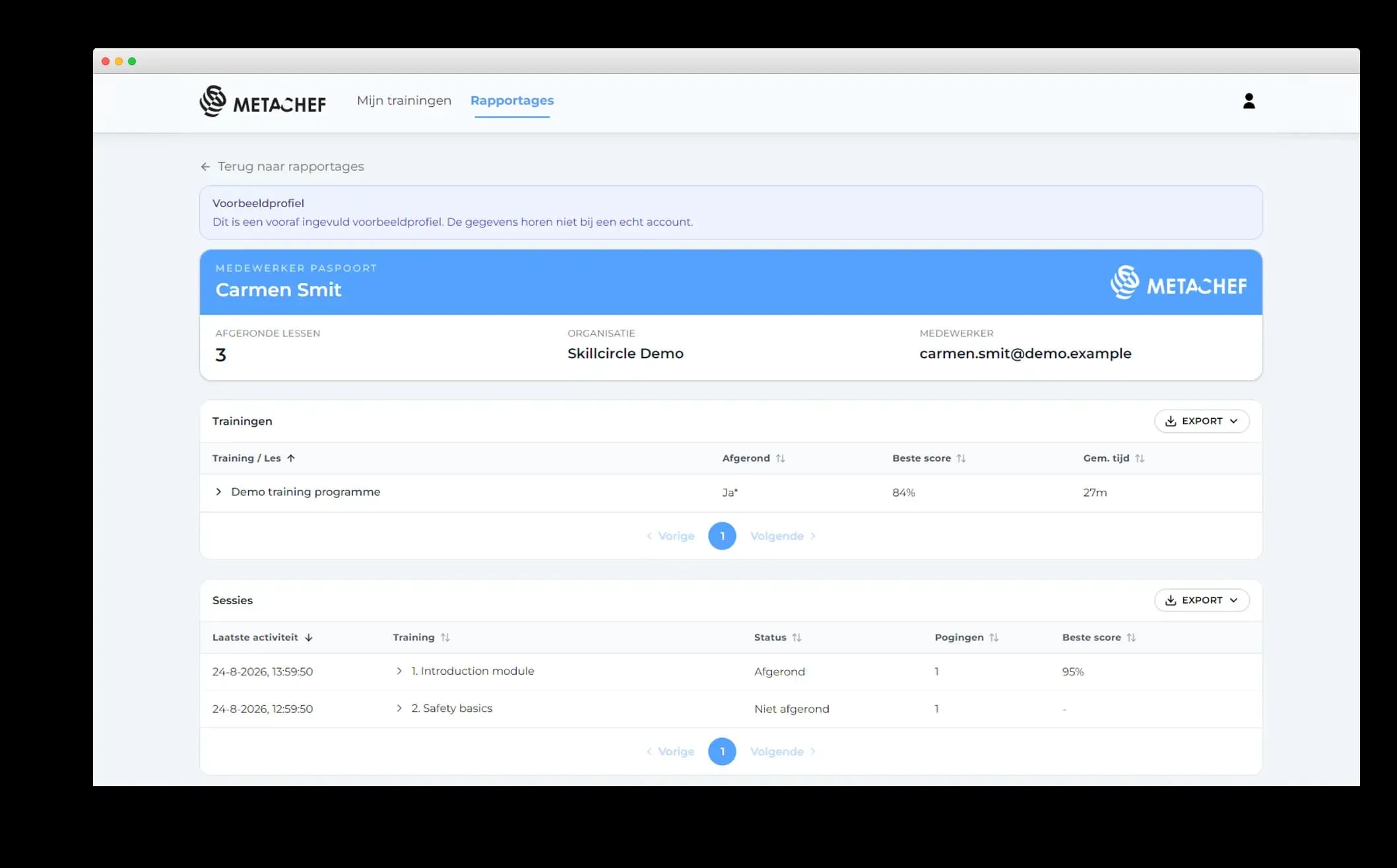
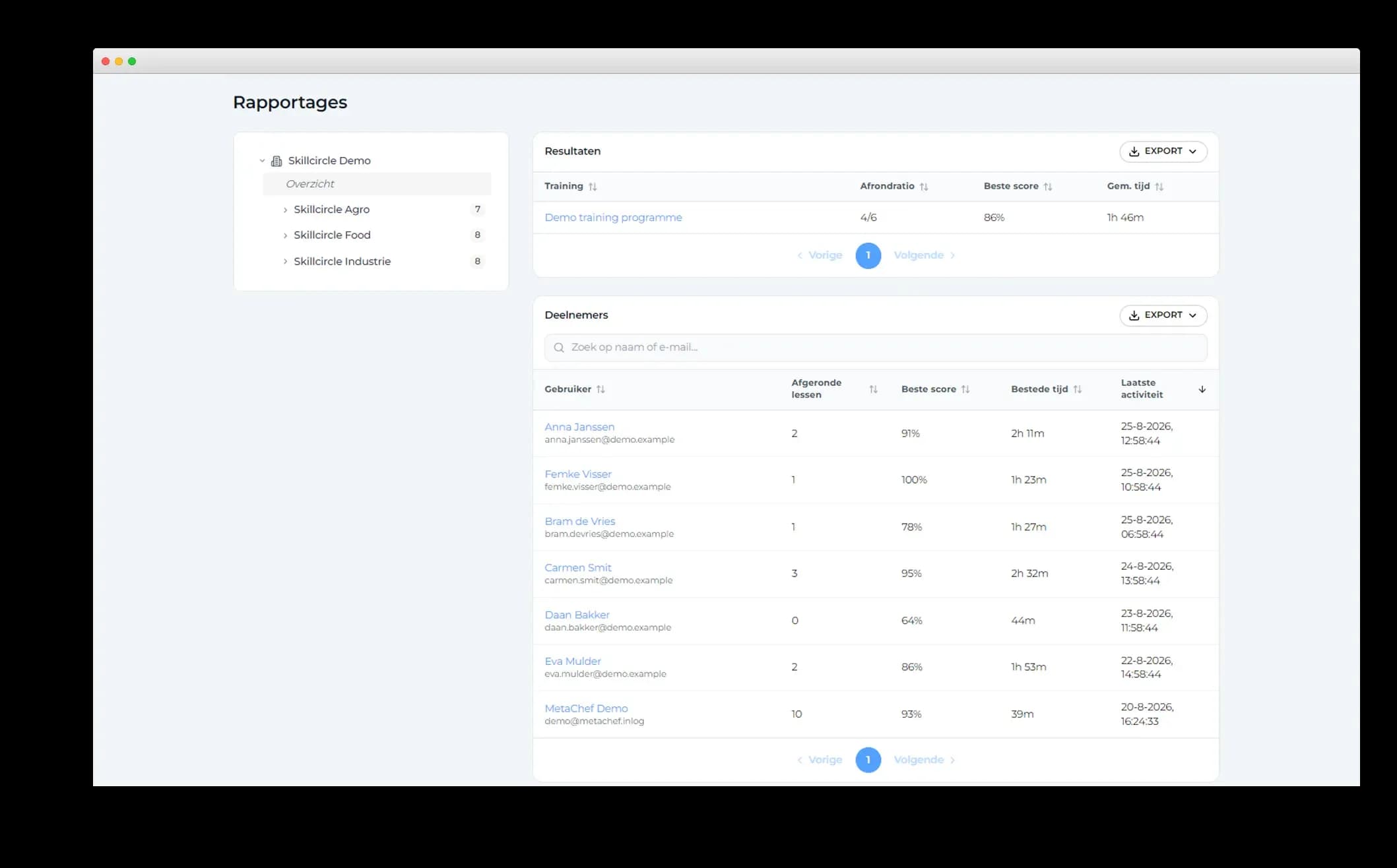
In het MetaChef-portal zie je per medewerker welke trainingen zijn gemaakt, hoeveel tijd eraan is besteed en welke scores op de kennischecks zijn behaald. Rapportages exporteer je als CSV of PDF, direct bruikbaar voor audits, RI&E-opvolging of klantrapportages. Herhalen na een incident, bij nieuwe taken of vóór een audit regel je met één klik.
Meertalige training werken op hoogte op elke telefoon
De training werkt volledig op mobiel: geen computer, klaslokaal of begeleider nodig. De meertalige instructie is toegankelijk voor medewerkers met verschillende taal- en leesniveaus. De 3D-beelden zorgen dat de stof ook overkomt bij beperkte leesvaardigheid. Flexkrachten kunnen de training zelfs al afronden vóór hun eerste werkdag.
Werken jouw mensen ook met vaste machines of taakspecifieke handelingen? Combineer deze module met visuele 3D-werkinstructies voor instructie op de werkplek zelf.
Taalondersteuning
Meertalig
Voor iedereen
Geschikt voor beperkte leesvaardigheid
Volledig op mobiel
Geen computer of klaslokaal nodig
Zelfstandig
Geen begeleider nodig
Gebruikersanalytics
Inzicht in voortgang per medewerker
Los of modulair
Combineer precies wat past





Deze week nog starten
De Skillcircle staat klaar: week één richten we accounts en de koppeling met je HR- of planningssysteem in, week twee gaan de eerste medewerkers live. Daarna train je doorlopend en herhaal je gericht waar de data dat nodig laat zien.
Week 1
Inrichten
Accounts aanmaken en koppeling met HR- of planningssysteem inrichten.
Week 2
Live
Eerste medewerkers live.
Doorlopend
Blijven trainen
Herhalen bij audits, nieuwe taken of na incidenten. Data en feedback om gericht bij te sturen.
Zien hoe het werkt?
Start je demo en bekijk de training Werken op hoogte zelf, samen met de rest van het Skillcircle-programma.

Veelgestelde vragen over werken op hoogte
Is een training werken op hoogte verplicht?
De Arbowet verplicht werkgevers om medewerkers doeltreffend én aantoonbaar voor te lichten over de risico's van hun werk. Bij werken op hoogte, doorgaans vanaf 2,5 meter of bij risico op vallen, hoort daar concrete instructie bij over hulpmiddelen en veiligheidsregels. Deze training geeft die instructie en levert het bewijs.
Welke situaties dekt de training?
De vier meest voorkomende: werken met een steiger, een ladder, een hoogwerker en op daken. Per situatie leert de medewerker de specifieke veiligheidsregels én wanneer welk hulpmiddel de veiligste keuze is.
Vervangt dit een hoogwerkercertificaat?
Nee. Voor het bedienen van een hoogwerker blijft aparte instructie of certificering nodig. Deze training zorgt dat álle medewerkers die op hoogte werken de basisregels kennen, en houdt die kennis met herhaling actueel.
Hoe snel kunnen medewerkers de training doen?
De module duurt kort en werkt op elke telefoon. Na de inrichting (één week) kan elke medewerker direct starten, ook vóór de eerste werkdag.