Transport and tools training
A reach truck driving into a trailer, a forklift in a narrow aisle: with the wrong equipment, a simple task turns into an accident. Yet employees often just grab whatever is closest. Dutch health and safety law requires more: employees must receive demonstrable instruction on their transport equipment. For employers, that means two things: employees who choose the right equipment, and proof that the instruction was provided.
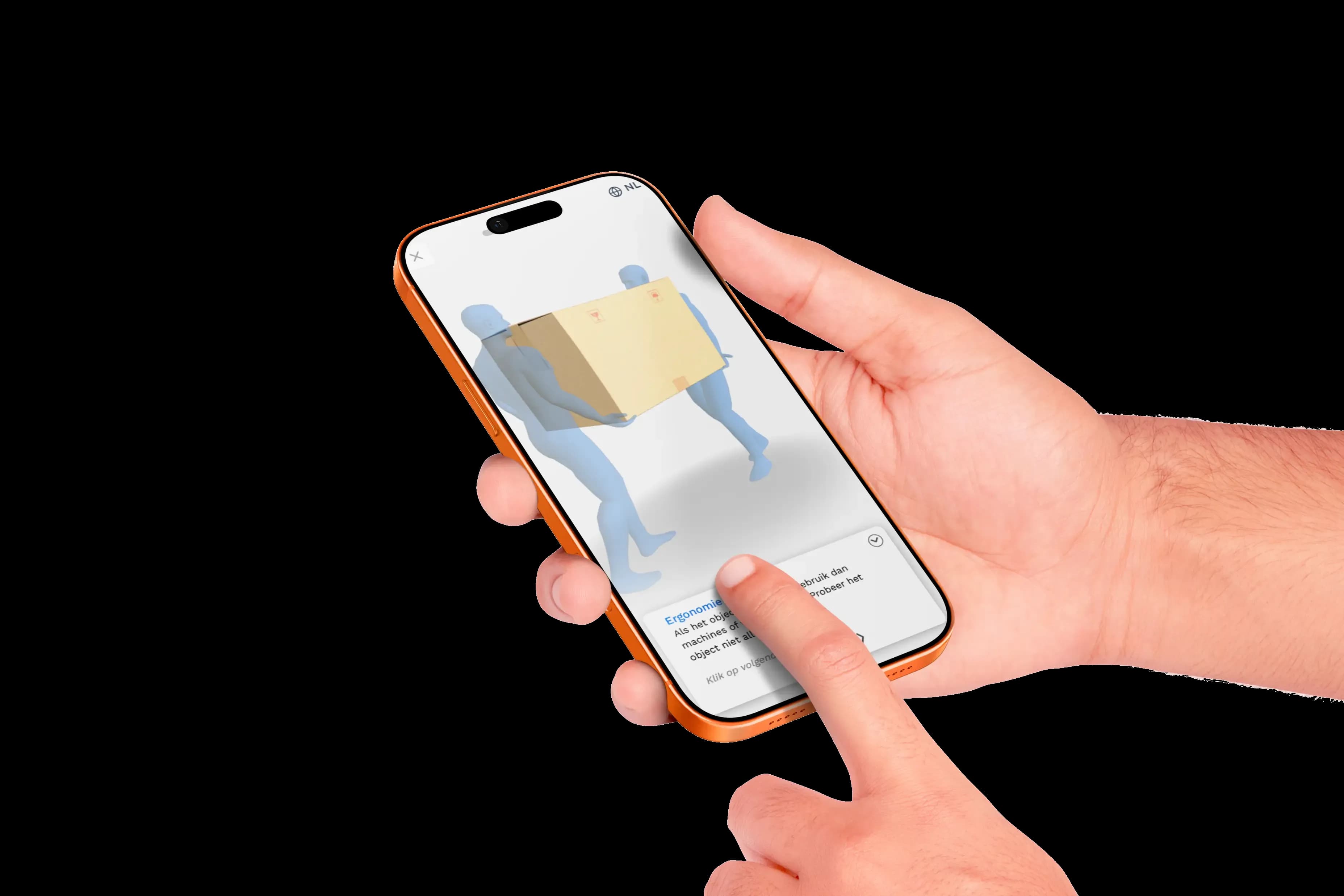
Skillcircle's Transport and equipment training delivers both. Employees see in 3D which equipment suits which task, and what to do when in doubt. You can see who completed the training. Use the module on its own or as part of the complete onboarding and safety training in 3D.
Safety rules for transport and tools
Not a theory book, but the safety rules for the four situations where things go wrong, shown step by step:
Working with a reach truck
Use the reach truck to place or retrieve loads high in the racking, including in narrow aisles. Never use it outside or in a truck.
Working with a forklift
The forklift is for lifting and stacking in wide aisles, at limited heights and outdoors. It is suitable for racking up to three levels high.
Working with an electric pallet truck (EPT)
Use the EPT for moving pallets at floor level, order picking and long distances. It is light and safe, which makes it ideal for loading and unloading trailers.
Special situations and safe use
Don't know the area, don't recognise the equipment or is the load different from normal? Stop, report it and ask for instruction, never pick up an unstable load and always return equipment to its designated place after use.
After the module, employees can name the right equipment for each situation and explain why it is the safest choice. A knowledge check completes the training. Follow the rules for yourself, not just for your manager: that is the message that sticks.
Demonstrable for every audit
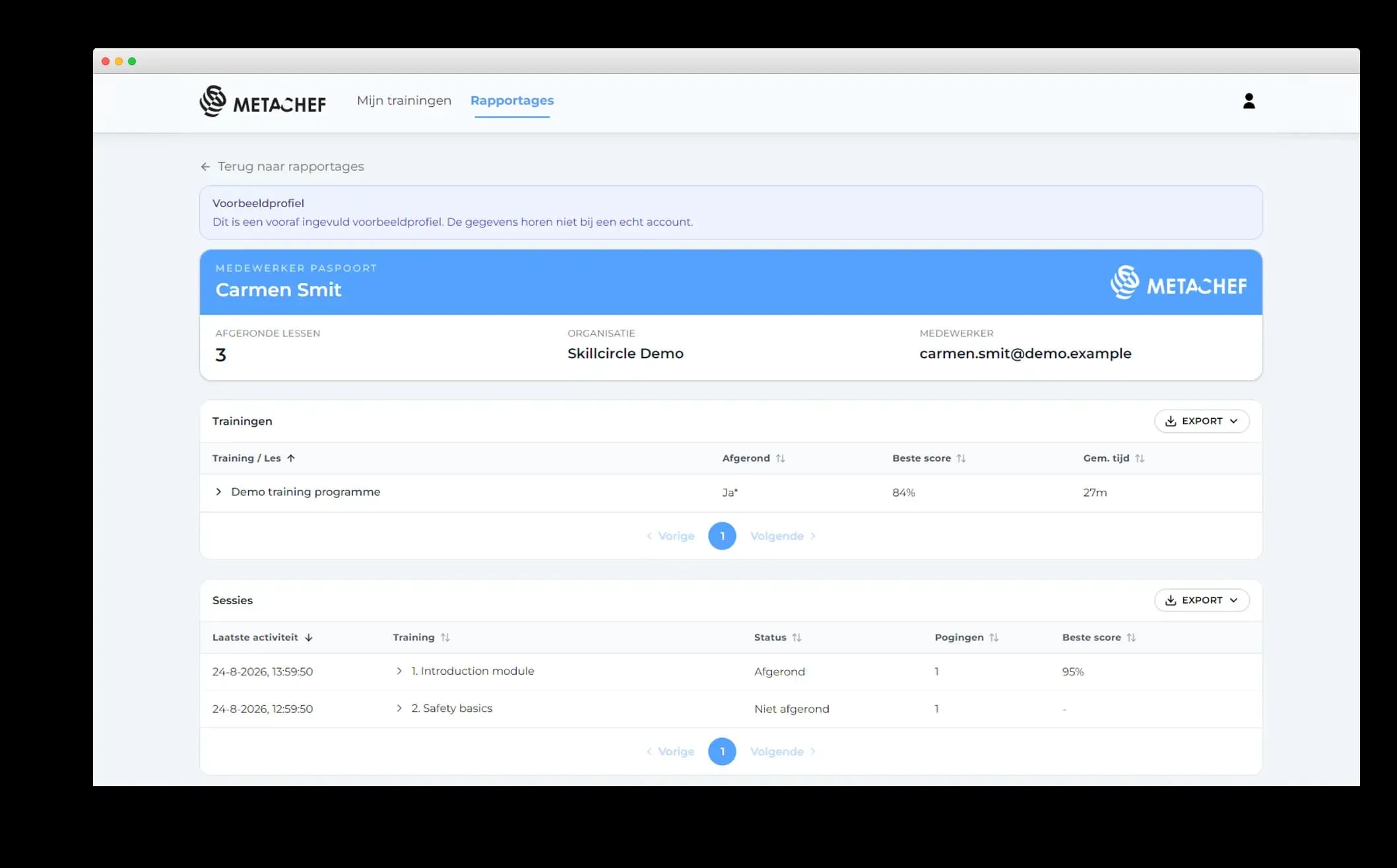
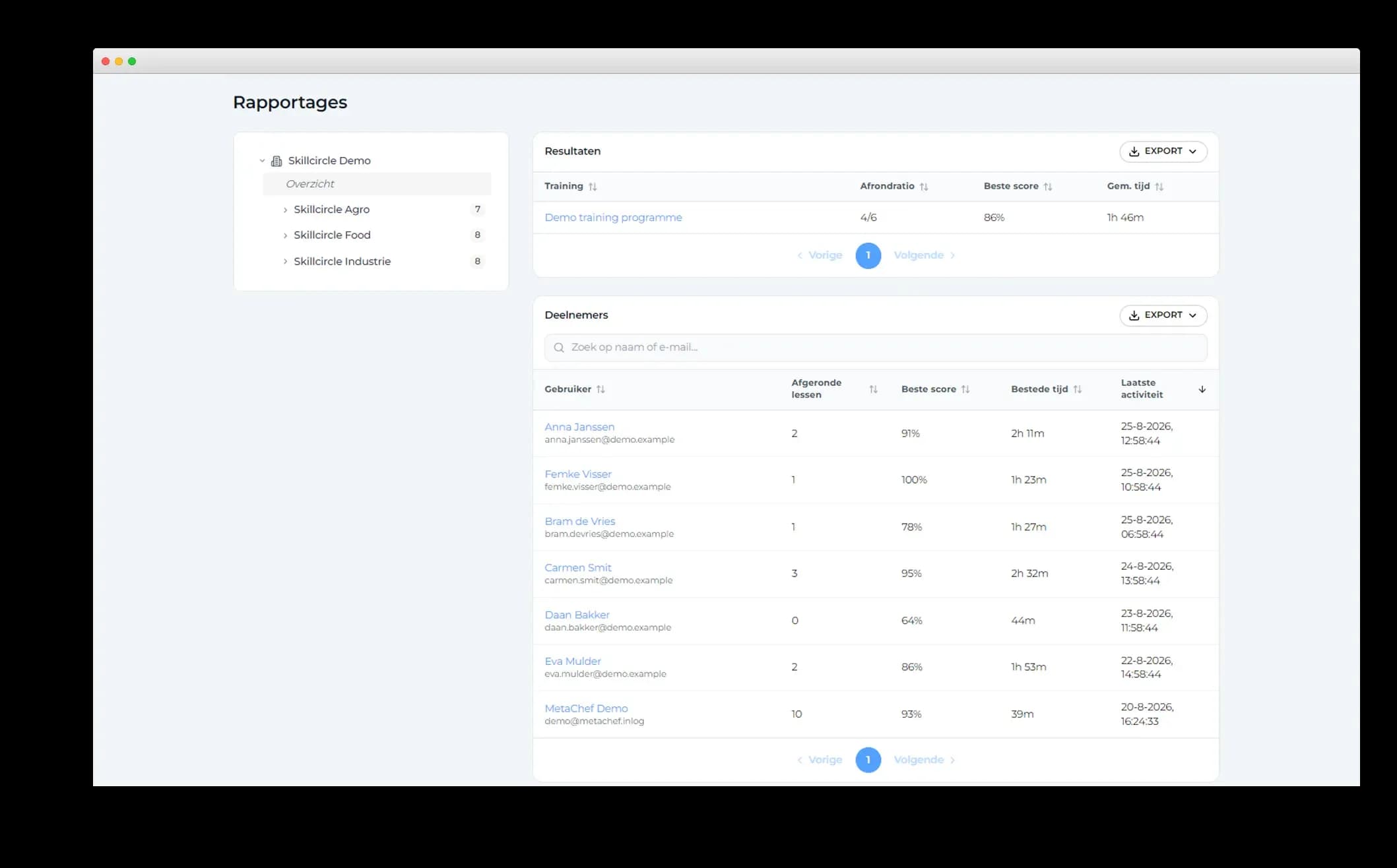
The MetaChef portal shows which training each employee completed, how much time they spent and their knowledge-check scores. Export reports as CSV or PDF, ready to use for the Dutch Labour Authority, your insurer, risk-assessment follow-up or audits. This shows that every employee knows which transport equipment is meant for what, and what to do when in doubt.
Multilingual transport and tools training on any phone
The training is fully mobile, with no computer, classroom or supervisor required. The multilingual instruction is accessible to employees with different language and literacy levels. The 3D visuals make the material clear for people with limited literacy. Temporary workers can even complete it before their first working day.
Want to show how the daily check works for each piece of equipment? Combine this module with visual 3D work instructions, right at the vehicle itself.
Language support
Multilingual
For everyone
Suitable for limited reading skills
Fully mobile
No computer or classroom needed
Independent
No supervisor required
User analytics
Insight into each employee's progress
Standalone or modular
Combine exactly what fits





Start this week
Skillcircle is ready to go: in week one, we configure accounts and the connection to your HR or planning system; in week two, the first employees go live. From then on, you train continuously and repeat instruction where the data shows it is needed.
Week 1
Set up
Create accounts and set up the connection with HR or planning system.
Week 2
Go live
First employees go live.
Ongoing
Keep training
Repeat training for audits, new tasks or after incidents. Use data and feedback to make targeted adjustments.
See how it works
Book a demo and explore the transport and tools training alongside the rest of the Skillcircle programme.
Frequently asked questions about transport and tools
What is the difference between a forklift and a reach truck?
A reach truck is built for height and narrow aisles: the mast moves forward, so it can place loads high in the racking without needing much turning space. A forklift is built for wide aisles, limited heights and outdoor work, such as loading and unloading in the yard. In short: the reach truck for high and narrow, the forklift for wide, low and outdoors.
Is a certificate required for an electric pallet truck (EPT)?
No, a certificate is not a legal requirement in the Netherlands, including for an EPT. However, the Dutch Working Conditions Decree requires that only employees with appropriate training operate self-propelled transport equipment, and the Working Conditions Act (Article 8) requires you to provide demonstrable instruction. This is often underestimated with an EPT: it is light and easy to operate, but with a full pallet on it you can easily be moving more than a thousand kilos. This training provides that instruction and records the evidence for each employee.
Can an employee with a forklift certificate also drive a reach truck?
Not automatically. A reach truck steers, drives and lifts differently from a forklift, so it requires its own training and instruction. As an employer, you make sure employees only operate the equipment they have been trained for. That's why this training also teaches: if you don't recognise the equipment or haven't been instructed on it, don't get on, but ask for an explanation first.
Why can't a reach truck be used outside or in a truck?
A reach truck has small wheels and little ground clearance, and is built for flat, smooth indoor floors. On uneven ground, a dock leveller or a trailer floor that gives way slightly, it quickly loses stability and can tip over. That's why you use an EPT for loading and unloading trailers, and a forklift outdoors.